Corporate profits, according to the Bureau of Economic Analysis, grew by $20.4 billion in the final quarter of 2021, a 0.7 percent increase. For the first quarter of 2022, corporate profits fell by 2.3 percent or $66.4 billion. On an annualized basis, corporate profits fell 5.2 percent in 2022, but grew 25 percent in 2021. With the economy facing inflation, the uncertainty of the Russia/Ukraine conflict, and the world working its way out of the COVID-19 pandemic, economic uncertainty abounds. For companies, measuring margins is one way to evaluate performance and strategize ways to survive and thrive in a dynamic economy. Here are a few common margins that businesses can determine to measure their financial performance.
Operating Margin Defined
Also referred to as return on sales, this measures the profit a business makes on a percentage basis, per dollar, from its core operations. It accounts for manufacturing costs that fluctuate, such as paying employees and input stock. The operating margin is determined by obtaining the business’ earnings before interest and taxes (EBIT) and dividing it by its net sales or sales revenue.
Operating Earnings = Revenue – (cost of goods sold (COGS) + overhead expenses, except tax and loan servicing costs)
Assuming a business had $10 million in revenue, $1.5 million of COGS and $750,000 in related overhead expenses, it would be as follows:
Operating Earnings = $10 million – ($1.5 million + $750,000) / $10 million
Operating Earnings = $10 million – ($2.25 million) / $10 million
Operating Earnings = $7.75 million / $10 million = 0.775 or 77.5%
Understanding the Operating Margin
This doesn’t factor in things such as taxes, interest on loans or other non-core business expenses. However, it gives a picture of what’s remaining for its non-core operating expenses, such as servicing outstanding loans. By looking at a company’s past operating margins, the trends can determine a company’s performance. Ways to improve the margin include reducing staff redundancy, negotiating better deals on raw materials or reaching more receptive customers.
Marginal Revenue Product (MRP)
If a piece of equipment or employee can create an output of X (the marginal physical product or MPP) and each additional unit of production sells at Z price (marginal revenue or MR), the MRP of the piece of the new investment is MPP x MR. Accepting that all other costs remain constant, if the business owner pays less than or equal to the MRP, it may be profitable. Otherwise, it’s not a good decision.
Using the example of a furniture manufacturer looking to respond to increased demand, this illustrates how it can guide business decisions. If a new employee can produce 100 tables every week that will retail for $100 per table, this is the MPP. Based on the calculation, the MPP of 100 multiplied by the marginal revenue (MR) of $100 = $10,000. If the business can hire and retain a new employee for less than $10,000 per week to increase their production by 100 tables per week, it can signal a positive investment.
Marginal Cost of Production
This metric is a way for businesses to determine efficient manufacturing costs. Looking at production volume, this calculation can determine if adding an additional unit to production would add profitability by examining fixed and variable costs. Fixed costs don’t change with modifications in production levels.
A static or fixed cost can be spread out over more units of increased production. However, if expanding production capacity requires additional fixed costs, it can add to the marginal cost of production, which will be explained shortly. When it comes to variable costs, as the name implies, as more production occurs, the costs similarly vary.
Assume company A makes widgets with $1 in variable costs and fixed costs of $10,000 per month, producing 5,000 widgets monthly. This would lead to $2 in fixed costs ($10,000 in fixed costs/5,000 widgets).
This final cost per widget comes to $3 ($2 fixed + $1 variable cost).
If company A chose to produce 10,000 widgets a month and they could use existing machinery, employees, etc., their fixed costs would drop to $1 ($10,000 in fixed costs/10,000 widgets).
Assuming the same variable cost of $1 per widget, plus the $1 in fixed costs, it would cost $2 per widget if the 10,000 widgets were produced. However, if additional investments (equipment, etc.) were needed to produce widget 5,001 to 10,000, this consideration would need to be factored in the marginal cost of production. If additional equipment costs $1,000 to increase production, the business would need to factor this in to see if it’s still profitable.
Essentially, if this additional production cost is less than the price of an additional individual unit, there’s the potential for a profit for the business.
Contribution Margin After Marketing (CMAM)
This measures how much cash is earned from a single unit sold after accounting for promotional and variable expenses. Example expenses include input stock, freight, inventory, etc. It’s important to distinguish between pre-planned marketing expenses over a set period of time (per month, quarter, etc.), and variable sales commissions that can fluctuate. CMAM is calculated as follows:
Looking at how much each unit can add to a business’ profitability:
CMAM for every Unit = Sales Revenue for every Unit – Variable Expenses for every Unit – Marketing Expense for every Unit
From there, a business’ net profit or loss can be found using this ratio:
Net Operating Profit = CMAM – Fixed Costs
Considerations
A smaller or negative CMAM is indicative of a product that’s likely uncompetitive. Conversely, a high CMAM, especially over a long time, can indicate the product is well regarded. It can help businesses to determine their most profitable products and/or what products to discontinue, etc.
With economic uncertainty expected to continue, keeping an eye on past, present and future margins is a key way to maintain a business’ chance of thriving in 2022 and beyond.
Corporate profits, according to the Bureau of Economic Analysis, grew by $20.4 billion in the final quarter of 2021, a 0.7 percent increase. For the first quarter of 2022, corporate profits fell by 2.3 percent or $66.4 billion. On an annualized basis, corporate profits fell 5.2 percent in 2022, but grew 25 percent in 2021. With the economy facing inflation, the uncertainty of the Russia/Ukraine conflict, and the world working its way out of the COVID-19 pandemic, economic uncertainty abounds. For companies, measuring margins is one way to evaluate performance and strategize ways to survive and thrive in a dynamic economy. Here are a few common margins that businesses can determine to measure their financial performance.
Operating Margin Defined
Also referred to as return on sales, this measures the profit a business makes on a percentage basis, per dollar, from its core operations. It accounts for manufacturing costs that fluctuate, such as paying employees and input stock. The operating margin is determined by obtaining the business’ earnings before interest and taxes (EBIT) and dividing it by its net sales or sales revenue.
Operating Earnings = Revenue – (cost of goods sold (COGS) + overhead expenses, except tax and loan servicing costs)
Assuming a business had $10 million in revenue, $1.5 million of COGS and $750,000 in related overhead expenses, it would be as follows:
Operating Earnings = $10 million – ($1.5 million + $750,000) / $10 million
Operating Earnings = $10 million – ($2.25 million) / $10 million
Operating Earnings = $7.75 million / $10 million = 0.775 or 77.5%
Understanding the Operating Margin
This doesn’t factor in things such as taxes, interest on loans or other non-core business expenses. However, it gives a picture of what’s remaining for its non-core operating expenses, such as servicing outstanding loans. By looking at a company’s past operating margins, the trends can determine a company’s performance. Ways to improve the margin include reducing staff redundancy, negotiating better deals on raw materials or reaching more receptive customers.
Marginal Revenue Product (MRP)
If a piece of equipment or employee can create an output of X (the marginal physical product or MPP) and each additional unit of production sells at Z price (marginal revenue or MR), the MRP of the piece of the new investment is MPP x MR. Accepting that all other costs remain constant, if the business owner pays less than or equal to the MRP, it may be profitable. Otherwise, it’s not a good decision.
Using the example of a furniture manufacturer looking to respond to increased demand, this illustrates how it can guide business decisions. If a new employee can produce 100 tables every week that will retail for $100 per table, this is the MPP. Based on the calculation, the MPP of 100 multiplied by the marginal revenue (MR) of $100 = $10,000. If the business can hire and retain a new employee for less than $10,000 per week to increase their production by 100 tables per week, it can signal a positive investment.
Marginal Cost of Production
This metric is a way for businesses to determine efficient manufacturing costs. Looking at production volume, this calculation can determine if adding an additional unit to production would add profitability by examining fixed and variable costs. Fixed costs don’t change with modifications in production levels.
A static or fixed cost can be spread out over more units of increased production. However, if expanding production capacity requires additional fixed costs, it can add to the marginal cost of production, which will be explained shortly. When it comes to variable costs, as the name implies, as more production occurs, the costs similarly vary.
Assume company A makes widgets with $1 in variable costs and fixed costs of $10,000 per month, producing 5,000 widgets monthly. This would lead to $2 in fixed costs ($10,000 in fixed costs/5,000 widgets).
This final cost per widget comes to $3 ($2 fixed + $1 variable cost).
If company A chose to produce 10,000 widgets a month and they could use existing machinery, employees, etc., their fixed costs would drop to $1 ($10,000 in fixed costs/10,000 widgets).
Assuming the same variable cost of $1 per widget, plus the $1 in fixed costs, it would cost $2 per widget if the 10,000 widgets were produced. However, if additional investments (equipment, etc.) were needed to produce widget 5,001 to 10,000, this consideration would need to be factored in the marginal cost of production. If additional equipment costs $1,000 to increase production, the business would need to factor this in to see if it’s still profitable.
Essentially, if this additional production cost is less than the price of an additional individual unit, there’s the potential for a profit for the business.
Contribution Margin After Marketing (CMAM)
This measures how much cash is earned from a single unit sold after accounting for promotional and variable expenses. Example expenses include input stock, freight, inventory, etc. It’s important to distinguish between pre-planned marketing expenses over a set period of time (per month, quarter, etc.), and variable sales commissions that can fluctuate. CMAM is calculated as follows:
Looking at how much each unit can add to a business’ profitability:
CMAM for every Unit = Sales Revenue for every Unit – Variable Expenses for every Unit – Marketing Expense for every Unit
From there, a business’ net profit or loss can be found using this ratio:
Net Operating Profit = CMAM – Fixed Costs
Considerations
A smaller or negative CMAM is indicative of a product that’s likely uncompetitive. Conversely, a high CMAM, especially over a long time, can indicate the product is well regarded. It can help businesses to determine their most profitable products and/or what products to discontinue, etc.
With economic uncertainty expected to continue, keeping an eye on past, present and future margins is a key way to maintain a business’ chance of thriving in 2022 and beyond.
These articles provide general information on tax, accounting, and financial topics for small businesses and individuals. They are educational in nature and are not specific legal, accounting, financial, tax, or other professional advice, and should not be relied upon as such. This content was prepared by Service2Client and may have been reviewed or edited by the website owner for accuracy and compliance. Look for a trust mark below for verification details. No representation is made that any approach described will achieve a particular result, and no regulatory or professional body has reviewed or endorsed this content. Because each situation is different, readers should consult a qualified professional about their specific circumstances before acting. Images accompanying these articles are protected by copyright and may not be copied or reused.
The Cash Conversion Cycle, also known as the Net Operating Cycle, answers the question, “How many days does it take a company to pay for and generate cash from the sales of its inventory?” However, before an analysis like this can take place, it’s important to consider the company’s primary line of business.
If the company sells software, it’s more challenging to measure performance if it generates revenue primarily on intellectual property – by developing computer code and licensing its use to clients. For online marketplaces, especially those that make the majority of their profits from third-party sellers that manage product sourcing, listing their inventory and shipping products on their own won’t measure the online marketplace’s own inventory. Since these types of businesses don’t act like a manufacturer that produces and sells products to other businesses or the general public, this type of analysis will be less helpful.
To start with the formula for the Cash Conversion Cycle (CCC), it’s calculated as follows:
CCC = Days of Sales Outstanding (DSO) + Days of Inventory Outstanding (DIO) – Days of Payables Outstanding (DPO)
Days of Sales Outstanding, Defined
DSO is the average number of days it takes a company to collect payment once a sale has completed. The beginning and ending Accounts Receivable figures from a fiscal year are added together and divided by 2. Then revenue from the income statement for the entire fiscal year must be divided by 365 days to get a daily average.
The fewer the days, the better; however, it can’t be so fast that such tight payment terms push customers away.
Days of Inventory Outstanding, Defined
DIO is the average number of days a business keeps its inventory before it’s purchased.
The beginning and ending inventories of a fiscal year are added together and divided by 2 to find an average. The resulting figure is then divided by the daily average of the cost of goods sold over a fiscal year, which is often 365 days.
DIO = Beginning Inventory + Ending Inventory / 2 = Cost of Goods Sold / 365 days
The lower the number, the faster inventory is sold. While there’s nothing wrong with moving it fast, there is the danger that orders might not be able to be fulfilled.
Defining the Operating Cycle
As the CFA Institute explains, putting DIO and DSO together constitutes the Operating Cycle. This is defined as the period of days that it takes a business to transform basic materials and/or goods into stock and obtain money from the completed transaction. When this number is small, it means product is moving and customers have no issue making prompt payments.
Days of Payable Outstanding, Defined
Days of Payable Outstanding determines the number of days a business takes to fulfill its debts to suppliers.
DPO = Beginning Accounts Payable + Ending Accounts Payable / 2 = Cost of Goods Sold / 365 days
Considerations for DPO include finding a balance between how long a business can take to pay their suppliers, but also not missing out on pre-payment discounts or being penalized with late fees, financing charges, etc.
Going Beyond the Results
When analyzing the Cash Conversion Cycle for the right type of company, it can provide great insight into a company’s efficiency in collecting billings; how long inventory is up for sale; and the time it takes to become current with its own suppliers. Depending on the results of the CCC analysis, performing financial analyses can provide insight into not only how the company is performing financially, but why the company is performing financially.
The Cash Conversion Cycle, also known as the Net Operating Cycle, answers the question, “How many days does it take a company to pay for and generate cash from the sales of its inventory?” However, before an analysis like this can take place, it’s important to consider the company’s primary line of business.
If the company sells software, it’s more challenging to measure performance if it generates revenue primarily on intellectual property – by developing computer code and licensing its use to clients. For online marketplaces, especially those that make the majority of their profits from third-party sellers that manage product sourcing, listing their inventory and shipping products on their own won’t measure the online marketplace’s own inventory. Since these types of businesses don’t act like a manufacturer that produces and sells products to other businesses or the general public, this type of analysis will be less helpful.
To start with the formula for the Cash Conversion Cycle (CCC), it’s calculated as follows:
CCC = Days of Sales Outstanding (DSO) + Days of Inventory Outstanding (DIO) – Days of Payables Outstanding (DPO)
Days of Sales Outstanding, Defined
DSO is the average number of days it takes a company to collect payment once a sale has completed. The beginning and ending Accounts Receivable figures from a fiscal year are added together and divided by 2. Then revenue from the income statement for the entire fiscal year must be divided by 365 days to get a daily average.
The fewer the days, the better; however, it can’t be so fast that such tight payment terms push customers away.
Days of Inventory Outstanding, Defined
DIO is the average number of days a business keeps its inventory before it’s purchased.
The beginning and ending inventories of a fiscal year are added together and divided by 2 to find an average. The resulting figure is then divided by the daily average of the cost of goods sold over a fiscal year, which is often 365 days.
DIO = Beginning Inventory + Ending Inventory / 2 = Cost of Goods Sold / 365 days
The lower the number, the faster inventory is sold. While there’s nothing wrong with moving it fast, there is the danger that orders might not be able to be fulfilled.
Defining the Operating Cycle
As the CFA Institute explains, putting DIO and DSO together constitutes the Operating Cycle. This is defined as the period of days that it takes a business to transform basic materials and/or goods into stock and obtain money from the completed transaction. When this number is small, it means product is moving and customers have no issue making prompt payments.
Days of Payable Outstanding, Defined
Days of Payable Outstanding determines the number of days a business takes to fulfill its debts to suppliers.
DPO = Beginning Accounts Payable + Ending Accounts Payable / 2 = Cost of Goods Sold / 365 days
Considerations for DPO include finding a balance between how long a business can take to pay their suppliers, but also not missing out on pre-payment discounts or being penalized with late fees, financing charges, etc.
Going Beyond the Results
When analyzing the Cash Conversion Cycle for the right type of company, it can provide great insight into a company’s efficiency in collecting billings; how long inventory is up for sale; and the time it takes to become current with its own suppliers. Depending on the results of the CCC analysis, performing financial analyses can provide insight into not only how the company is performing financially, but why the company is performing financially.
These articles provide general information on tax, accounting, and financial topics for small businesses and individuals. They are educational in nature and are not specific legal, accounting, financial, tax, or other professional advice, and should not be relied upon as such. This content was prepared by Service2Client and may have been reviewed or edited by the website owner for accuracy and compliance. Look for a trust mark below for verification details. No representation is made that any approach described will achieve a particular result, and no regulatory or professional body has reviewed or endorsed this content. Because each situation is different, readers should consult a qualified professional about their specific circumstances before acting. Images accompanying these articles are protected by copyright and may not be copied or reused.
According to the January 2022 Future Forum Pulse survey, there’s been a shift in what workers want post-pandemic. The report found that in Q4 of 2021, 78 percent of workers from six industrialized companies wanted location flexibility. The survey also found that 95 percent desired schedule flexibility. This is in light of the same survey finding that 72 percent of employees desire greater flexibility from their current places of employment. Those same workers reported that if they can’t find more flexible arrangements, they would seek out another employer that provides greater flexibility – compared to 57 percent expressing the same desire in Q3 of 2021.
According to a December 2017 Gallup report titled, “Thinking Flexibly About Flexible Work Arrangements,” along with helping develop and keep high-performing workers, creating and improving a flexible workplace also intensifies the tie workers have to their employer, as well as reducing employer expenses. While lowering costs is always attractive, it’s important to understand that not every role or type of business will have the same implementation opportunities.
When businesses formulate their flexible working arrangement, employers and employees must be on the same page, have clear expectations, and a way to measure that work is being completed in a manner similar to that in office. One important consideration is ensuring that remote employees are treated with the same consideration for potential promotions, projects, etc. Do managers and senior executives maintain the same level of treatment of employees whether someone comes into the office or works remotely and at different hours?
As for jobs that cannot be performed remotely, flexibility may not be very realistic. However, businesses can offer employees compensatory approaches to flexibility. Examples include a relaxed dress code and the ability, within reason, to choose lunch and break times. Employers also may offer the option for both an open floor plan and traditional office space to provide variety that leads to creativity and innovation.
Additionally, employers can create digital spaces where in-person workers can communicate with co-workers to discuss covering and switching shifts in their work schedules, helping them attend to their personal lives better and foster camaraderie. Businesses also can gamify employees covering each other shifts; for example, by offering a reward system if they take on extra shifts.
Permitting workers to select their preferred variety of tasks gives employees an awareness of freedom and can increase capabilities. By switching tasks within a pre-determined time frame or permitting employees to work at different offices or sites, employers can similarly provide a flexible working arrangement. This lets employees take on new responsibilities, workplace flows, and engage with different co-workers.
Variations on Flexible Working Arrangements
Another option is to work around employees’ personal circumstances. It could be a school system holding classes every other month or a mixed schedule. It also could take the shape of a four-day work week, whereby employees work 10 hours a day. This could similarly benefit families with children, parents, etc. that have medical or other special needs that can be addressed efficiently by a shorter but equally productive work week.
Splitting a Position
Having two (or more) employees perform duties of one full-time worker is called job sharing. This happens via employees performing a part-time schedule, combining to create a single full-time position. It’s able to satisfy the role of a full-time job while meeting the needs of workers looking for part-time work.
Legal Considerations
One consideration for employers to maintain compliance with the Fair Labor Standards Act (FLSA) for non-exempt employees with flexible work arrangements is to strictly monitor hours worked. According to the FLSA, non-exempt employees must receive 1.5 times standard wages when they work beyond 40 hours within any continuous seven-day work week. Ensuring that workplace guidelines are crafted and implemented equally, as well as documenting the implementation, is one way to reduce the risk of discrimination claims.
While providing flexible working arrangements is unique to every business, offering it can provide many benefits, especially the potential to attract and retain high-performing staff.
Combating Employee Hesitancy to Return to the Office
May 1, 2022 · Blog, General Business News
⏱ 4 min read
According to the January 2022 Future Forum Pulse survey, there’s been a shift in what workers want post-pandemic. The report found that in Q4 of 2021, 78 percent of workers from six industrialized companies wanted location flexibility. The survey also found that 95 percent desired schedule flexibility. This is in light of the same survey finding that 72 percent of employees desire greater flexibility from their current places of employment. Those same workers reported that if they can’t find more flexible arrangements, they would seek out another employer that provides greater flexibility – compared to 57 percent expressing the same desire in Q3 of 2021.
According to a December 2017 Gallup report titled, “Thinking Flexibly About Flexible Work Arrangements,” along with helping develop and keep high-performing workers, creating and improving a flexible workplace also intensifies the tie workers have to their employer, as well as reducing employer expenses. While lowering costs is always attractive, it’s important to understand that not every role or type of business will have the same implementation opportunities.
When businesses formulate their flexible working arrangement, employers and employees must be on the same page, have clear expectations, and a way to measure that work is being completed in a manner similar to that in office. One important consideration is ensuring that remote employees are treated with the same consideration for potential promotions, projects, etc. Do managers and senior executives maintain the same level of treatment of employees whether someone comes into the office or works remotely and at different hours?
As for jobs that cannot be performed remotely, flexibility may not be very realistic. However, businesses can offer employees compensatory approaches to flexibility. Examples include a relaxed dress code and the ability, within reason, to choose lunch and break times. Employers also may offer the option for both an open floor plan and traditional office space to provide variety that leads to creativity and innovation.
Additionally, employers can create digital spaces where in-person workers can communicate with co-workers to discuss covering and switching shifts in their work schedules, helping them attend to their personal lives better and foster camaraderie. Businesses also can gamify employees covering each other shifts; for example, by offering a reward system if they take on extra shifts.
Permitting workers to select their preferred variety of tasks gives employees an awareness of freedom and can increase capabilities. By switching tasks within a pre-determined time frame or permitting employees to work at different offices or sites, employers can similarly provide a flexible working arrangement. This lets employees take on new responsibilities, workplace flows, and engage with different co-workers.
Variations on Flexible Working Arrangements
Another option is to work around employees’ personal circumstances. It could be a school system holding classes every other month or a mixed schedule. It also could take the shape of a four-day work week, whereby employees work 10 hours a day. This could similarly benefit families with children, parents, etc. that have medical or other special needs that can be addressed efficiently by a shorter but equally productive work week.
Splitting a Position
Having two (or more) employees perform duties of one full-time worker is called job sharing. This happens via employees performing a part-time schedule, combining to create a single full-time position. It’s able to satisfy the role of a full-time job while meeting the needs of workers looking for part-time work.
Legal Considerations
One consideration for employers to maintain compliance with the Fair Labor Standards Act (FLSA) for non-exempt employees with flexible work arrangements is to strictly monitor hours worked. According to the FLSA, non-exempt employees must receive 1.5 times standard wages when they work beyond 40 hours within any continuous seven-day work week. Ensuring that workplace guidelines are crafted and implemented equally, as well as documenting the implementation, is one way to reduce the risk of discrimination claims.
While providing flexible working arrangements is unique to every business, offering it can provide many benefits, especially the potential to attract and retain high-performing staff.
These articles provide general information on tax, accounting, and financial topics for small businesses and individuals. They are educational in nature and are not specific legal, accounting, financial, tax, or other professional advice, and should not be relied upon as such. This content was prepared by Service2Client and may have been reviewed or edited by the website owner for accuracy and compliance. Look for a trust mark below for verification details. No representation is made that any approach described will achieve a particular result, and no regulatory or professional body has reviewed or endorsed this content. Because each situation is different, readers should consult a qualified professional about their specific circumstances before acting. Images accompanying these articles are protected by copyright and may not be copied or reused.
According to the U.S. Small Business Administration and Project Equality, 60 percent of business owners plan to cash out of the business in the next 10 years. For the baby boomer generation, it’s especially important as they contemplate retirement, with this generation reportedly owning 2.3 million businesses. When it comes to getting a business ready for sale, there are many components to review and get organized before looking for prospective buyers.
The first thing owners looking to sell their business are being asked is why they’re selling. This may occur for many reasons – voluntary or not. Some people are looking to retire, while others might be looking to exit their business because things soured with partners. These are just some of the reasons why business owners or partners want to sell their business or stake in a company. Entrepreneur magazine says there are “three ways to leave a business – sell it, merge it or close it.”
According to Entrepreneur magazine, there are many considerations for business owners when they are contemplating selling. For profitable companies, it’s more often due to choosing to sell, but not always. When there’s the desire to sell a business, if the owners can show potential purchasers some or all of the following, chances are it will sell sooner than later and for a fair price: growing income, profitability, and a customer base, along with a business plan and product/services with long-term potential.
Another consideration is timing of the sale. Ideally, getting the business’ house in order will benefit both the seller and the buyer. With this in mind, it’s important to have a few backup buyers in case the first deal falls through. One reason a deal may fall through is because the buyer didn’t qualify for financing before the sales process got serious. This planning can give the business owner and potential buyers time to review, audit and organize financial records; review and determine the business structure; and determine and analyze the business’ customer base. This review and organization will be able to help the new buyer maintain business continuity, if they decide to purchase the business.
The next step is to get documents in order. Organize the cash flow statement, balance sheet and income statements, along with tax returns from the past few years. It’s important to inventory all equipment, intellectual property, trade secrets, etc. to see what can be sold and transferred and verify the current market value of each. Taking stock of both sales records and suppliers, and getting contact information for both will help make a sale more likely. Depending on if the information is proprietary or not, it’s important to have this ready to share, under confidentiality, with potential buyers. An operating manual and a general overview of the business are also necessary in order to show the company’s presence clean and repaired.
Another consideration is how business assets that aren’t so easy to touch will be valued. According to the American Bar Association, goodwill is an intangible asset, such as reputation, along with intellectual property like trademark. The New York State Society of CPAs’ (NYSSCPA) publication, The CPA Journal, reports that goodwill has an indefinite life, and one way to see if it meets the test of being goodwill is if it “is inseparable from the business.”
Another consideration when selling a business is to see its recent cash flow and to calculate it properly for potential buyers. According to the NYSSCPA and the Statement of Financial Accounting Standards (SAFS) 95, cash flow from operating activities (CFO), per the SFAS 95’s statement of cash flow (SCF), is calculated by starting with the net loss or income and then factoring in differences in working capital and non-cash sales.
Once the CFO is calculated, this figure shows how much the business earns from its operating activities, as the name implies. It’s important to see how this figure differs from investing or financing operations that may be ancillary to the company’s irregular financials. Once this information is known, it gives potential buyers an accurate assessment of the company they are buying to see if they’re comfortable with the existing business. Showing a business that’s doing well can help attract buyers at a fair price.
While each business is different and the reasons for exiting it vary, understanding what potential buyers are looking for can increase the chances of a fast sale at a fair price for both seller and buyer.
According to the U.S. Small Business Administration and Project Equality, 60 percent of business owners plan to cash out of the business in the next 10 years. For the baby boomer generation, it’s especially important as they contemplate retirement, with this generation reportedly owning 2.3 million businesses. When it comes to getting a business ready for sale, there are many components to review and get organized before looking for prospective buyers.
The first thing owners looking to sell their business are being asked is why they’re selling. This may occur for many reasons – voluntary or not. Some people are looking to retire, while others might be looking to exit their business because things soured with partners. These are just some of the reasons why business owners or partners want to sell their business or stake in a company. Entrepreneur magazine says there are “three ways to leave a business – sell it, merge it or close it.”
According to Entrepreneur magazine, there are many considerations for business owners when they are contemplating selling. For profitable companies, it’s more often due to choosing to sell, but not always. When there’s the desire to sell a business, if the owners can show potential purchasers some or all of the following, chances are it will sell sooner than later and for a fair price: growing income, profitability, and a customer base, along with a business plan and product/services with long-term potential.
Another consideration is timing of the sale. Ideally, getting the business’ house in order will benefit both the seller and the buyer. With this in mind, it’s important to have a few backup buyers in case the first deal falls through. One reason a deal may fall through is because the buyer didn’t qualify for financing before the sales process got serious. This planning can give the business owner and potential buyers time to review, audit and organize financial records; review and determine the business structure; and determine and analyze the business’ customer base. This review and organization will be able to help the new buyer maintain business continuity, if they decide to purchase the business.
The next step is to get documents in order. Organize the cash flow statement, balance sheet and income statements, along with tax returns from the past few years. It’s important to inventory all equipment, intellectual property, trade secrets, etc. to see what can be sold and transferred and verify the current market value of each. Taking stock of both sales records and suppliers, and getting contact information for both will help make a sale more likely. Depending on if the information is proprietary or not, it’s important to have this ready to share, under confidentiality, with potential buyers. An operating manual and a general overview of the business are also necessary in order to show the company’s presence clean and repaired.
Another consideration is how business assets that aren’t so easy to touch will be valued. According to the American Bar Association, goodwill is an intangible asset, such as reputation, along with intellectual property like trademark. The New York State Society of CPAs’ (NYSSCPA) publication, The CPA Journal, reports that goodwill has an indefinite life, and one way to see if it meets the test of being goodwill is if it “is inseparable from the business.”
Another consideration when selling a business is to see its recent cash flow and to calculate it properly for potential buyers. According to the NYSSCPA and the Statement of Financial Accounting Standards (SAFS) 95, cash flow from operating activities (CFO), per the SFAS 95’s statement of cash flow (SCF), is calculated by starting with the net loss or income and then factoring in differences in working capital and non-cash sales.
Once the CFO is calculated, this figure shows how much the business earns from its operating activities, as the name implies. It’s important to see how this figure differs from investing or financing operations that may be ancillary to the company’s irregular financials. Once this information is known, it gives potential buyers an accurate assessment of the company they are buying to see if they’re comfortable with the existing business. Showing a business that’s doing well can help attract buyers at a fair price.
While each business is different and the reasons for exiting it vary, understanding what potential buyers are looking for can increase the chances of a fast sale at a fair price for both seller and buyer.
These articles provide general information on tax, accounting, and financial topics for small businesses and individuals. They are educational in nature and are not specific legal, accounting, financial, tax, or other professional advice, and should not be relied upon as such. This content was prepared by Service2Client and may have been reviewed or edited by the website owner for accuracy and compliance. Look for a trust mark below for verification details. No representation is made that any approach described will achieve a particular result, and no regulatory or professional body has reviewed or endorsed this content. Because each situation is different, readers should consult a qualified professional about their specific circumstances before acting. Images accompanying these articles are protected by copyright and may not be copied or reused.
According to the U.S. Chamber of Commerce, the level of usage and data swirling around the internet is expanding at an accelerating pace. The amount of data on the internet globally during 2020 amounted to 3 trillion gigabytes; and 2022’s traffic is expected to increase to 4.5 trillion gigabytes. As a result, the U.S. Chamber of Commerce is concerned about the challenges American companies will have when it comes to business competitiveness.
According to a survey from Statista titled “Challenges encountered as a result of digital transformations in global organizations as of 2020,” there are common challenges that businesses are facing, such as:
51 percent of respondents said that “skill gaps have opened up on traditional teams as top talent moves to digital teams or products”
48 percent said that “cultural differences or conflicts have arisen between traditional and digital teams”
41 percent also mentioned that “traditional teams have struggled to keep up with the pace of how digital teams work”
With so many issues businesses face as technology races ahead, it’s important for organizations to recognize and adapt to the dynamics of digital commerce. According to Harvard Business Review (HBR), it’s important to align the business and its goals correctly, especially when it comes to getting the most out of software development. For example, when companies buy software, they generally use third-party software for all their needs. While accounting and human resources functions may be fine for standardized uses, there are often situations when a personalized approach is needed to provide customers with a memorable experience.
HBR suggests businesses take certain steps that can make the journey easier and more effective in the long run. The first thing to do is identify current information technology-focused employees, because they’re the most closely aligned and ready for the transition. Along with looking for outside talent, it’s important to let internal software developers have an active role in the process.
It’s also important to let developers be stakeholders (along with accountability for failure) for solving organizational challenges versus giving them rigid assignments. Don’t focus exclusively on punishing failure; instead, encourage developers to analyze, pick apart reasons why failure happened and how future experiments can incorporate learning from past failures. Include developers in discussions with the people who will be using the software (other employees and customers who will be using it in the future).
Let’s look at Domino’s mobile application development as a case study. They were able stand out by improving their app with a feature that gave customers the ability to track their order from when it was being prepared to delivery. This process included increasing the efficiency of its systems, practices and techniques, along with having employees who performed advertising related functions work closely with software developers. It helped their stock price increase dramatically, performing better than many publicly traded technology companies.
One challenge for businesses going forward is since there are still tens of millions expected to come online with broadband, the amount of data and traffic will only increase. When it comes to broadband service requirements set by the Federal Communications Commission (FCC), they are at least 25 Mbps to download and 3 Mbps to upload. According to the FCC, approximately 14 million Americans lack broadband, with as many as 42 million reporting lack of access, according to Broadband Now Research. New York City’s Mayor’s Office of Technology reports that 18 percent of NYC residents lack broadband, making it problematic to work from home, access government services online, make doctor appointments, etc.
According to a December 2021 Digital Trade and U.S. Trade Policy report from the Congressional Research Service, there’s no stopping the expansion of trade in the digital world. It found statistics from the Department of Commerce for the “digital economy,” where 9.6 percent of GDP was generated from this sector. It also found that 7.7 million workers were employed because of this approach to commerce. However, unless businesses take care to ensure the same level of communication is accessible, formally and informally, there may not be the same level of efficiency for remote workers.
According to MIT Sloan Management Review, remote workers are at a disadvantage when it comes to indirect types of learning employees have compared with in-person settings. Whether it’s before work starts, during break or lunch time, or interacting with or observing a customer or client, employees working virtually have little to zero of these types of passive opportunities to learn on the job. Be it an additional comment after signing off an email, having a few opportunities to chat or talk online during breaks or similar, this type of passive informal communication needs to be addressed to make up for the in-person experiences other employees have.
While the way work will be conducted in the future can’t be predicted, it will certainly include using the internet – and for many employees, it will involve some time away from the office.
How Businesses Can Stay Current with the Digital Economy
March 1, 2022 · Blog, General Business News
⏱ 5 min read
According to the U.S. Chamber of Commerce, the level of usage and data swirling around the internet is expanding at an accelerating pace. The amount of data on the internet globally during 2020 amounted to 3 trillion gigabytes; and 2022’s traffic is expected to increase to 4.5 trillion gigabytes. As a result, the U.S. Chamber of Commerce is concerned about the challenges American companies will have when it comes to business competitiveness.
According to a survey from Statista titled “Challenges encountered as a result of digital transformations in global organizations as of 2020,” there are common challenges that businesses are facing, such as:
51 percent of respondents said that “skill gaps have opened up on traditional teams as top talent moves to digital teams or products”
48 percent said that “cultural differences or conflicts have arisen between traditional and digital teams”
41 percent also mentioned that “traditional teams have struggled to keep up with the pace of how digital teams work”
With so many issues businesses face as technology races ahead, it’s important for organizations to recognize and adapt to the dynamics of digital commerce. According to Harvard Business Review (HBR), it’s important to align the business and its goals correctly, especially when it comes to getting the most out of software development. For example, when companies buy software, they generally use third-party software for all their needs. While accounting and human resources functions may be fine for standardized uses, there are often situations when a personalized approach is needed to provide customers with a memorable experience.
HBR suggests businesses take certain steps that can make the journey easier and more effective in the long run. The first thing to do is identify current information technology-focused employees, because they’re the most closely aligned and ready for the transition. Along with looking for outside talent, it’s important to let internal software developers have an active role in the process.
It’s also important to let developers be stakeholders (along with accountability for failure) for solving organizational challenges versus giving them rigid assignments. Don’t focus exclusively on punishing failure; instead, encourage developers to analyze, pick apart reasons why failure happened and how future experiments can incorporate learning from past failures. Include developers in discussions with the people who will be using the software (other employees and customers who will be using it in the future).
Let’s look at Domino’s mobile application development as a case study. They were able stand out by improving their app with a feature that gave customers the ability to track their order from when it was being prepared to delivery. This process included increasing the efficiency of its systems, practices and techniques, along with having employees who performed advertising related functions work closely with software developers. It helped their stock price increase dramatically, performing better than many publicly traded technology companies.
One challenge for businesses going forward is since there are still tens of millions expected to come online with broadband, the amount of data and traffic will only increase. When it comes to broadband service requirements set by the Federal Communications Commission (FCC), they are at least 25 Mbps to download and 3 Mbps to upload. According to the FCC, approximately 14 million Americans lack broadband, with as many as 42 million reporting lack of access, according to Broadband Now Research. New York City’s Mayor’s Office of Technology reports that 18 percent of NYC residents lack broadband, making it problematic to work from home, access government services online, make doctor appointments, etc.
According to a December 2021 Digital Trade and U.S. Trade Policy report from the Congressional Research Service, there’s no stopping the expansion of trade in the digital world. It found statistics from the Department of Commerce for the “digital economy,” where 9.6 percent of GDP was generated from this sector. It also found that 7.7 million workers were employed because of this approach to commerce. However, unless businesses take care to ensure the same level of communication is accessible, formally and informally, there may not be the same level of efficiency for remote workers.
According to MIT Sloan Management Review, remote workers are at a disadvantage when it comes to indirect types of learning employees have compared with in-person settings. Whether it’s before work starts, during break or lunch time, or interacting with or observing a customer or client, employees working virtually have little to zero of these types of passive opportunities to learn on the job. Be it an additional comment after signing off an email, having a few opportunities to chat or talk online during breaks or similar, this type of passive informal communication needs to be addressed to make up for the in-person experiences other employees have.
While the way work will be conducted in the future can’t be predicted, it will certainly include using the internet – and for many employees, it will involve some time away from the office.
These articles provide general information on tax, accounting, and financial topics for small businesses and individuals. They are educational in nature and are not specific legal, accounting, financial, tax, or other professional advice, and should not be relied upon as such. This content was prepared by Service2Client and may have been reviewed or edited by the website owner for accuracy and compliance. Look for a trust mark below for verification details. No representation is made that any approach described will achieve a particular result, and no regulatory or professional body has reviewed or endorsed this content. Because each situation is different, readers should consult a qualified professional about their specific circumstances before acting. Images accompanying these articles are protected by copyright and may not be copied or reused.
Yearly performance evaluations just might be heading out the door, according to a recent WorkHuman Analytics & Research Institute Survey. Findings reveal that these appraisals are less than effective and used less often. Based on select findings, 55 percent of employees responded that yearly evaluations don’t help them become better in their role. Almost as many, 53 percent, indicated that annual reviews recognize an employee’s complete workload. The survey also found that only 54 percent of businesses used annual reviews in 2019, compared to 82 percent of workers saying their employer used annual reviews in 2016.
According to Gallup, only 14 percent of workers responded positively that performance reviews motivated them to get better at their skill set. It also found that among businesses with 10,000 workers, time taken for performance evaluations reduced employee productivity by at least $2.4 million and up to $35 million. It also found that one-third of workers’ output and quality declined.
When it comes to traditional performance reviews, many employees believe they are run by managers with little regard to any employee input whatsoever. However, there are other ways to evaluate an employee: the worker can evaluate themselves; their co-workers can appraise them; or a combination of a self-, peer- and manager-focused assessment.
As Harvard Business Review explains, since traditional performance reviews are mutually stressful for managers and their subordinates, there are a few recommendations to attempt to make it a more productive experience.
The first recommendation is to set initial, mutual expectations for manager and employee. When the year begins, the business’ performance requirements should be detailed for the employee so that expectations are clear. By setting performance objectives with the employee, the manager and business will ensure that employees are answerable for their performance.
The second step is to prepare for the in-person evaluation as it gets closer to the meeting. Two weeks before the in-person evaluation, HBR recommends that workers and managers review their past accomplishments – good, bad, etc. Managers could also ask for objective co-workers’ assessments of the employee’s work to garner different perspectives on their performance.
Before a face-to-face meeting, give the employee the assessment to let them internalize it and let their emotions settle before the discussion. From there, the atmosphere should be established by the manager. When it comes to competent, high performers, managers should keep the reviews on the workers’ accomplishments and progression at the company, along with concerns they might have in their role. For poor performers, putting the focus on accountability and improved results is the recommended route.
Asking employees what’s working and what’s not working can be helpful for both manager and employee. It’s also recommended to point out what specific actions, not generalities, employees should take to keep improving.
Based on the evolution of how and where work is being conducted, it seems that the annual performance review needs to be re-evaluated and updated. Only time will tell how it will change, but based on what’s not working, it will evolve as the workplace moves deeper into the 21st century.
What’s the Future for Measuring Employee Performance?
February 1, 2022 · Blog, General Business News
⏱ 3 min read
Yearly performance evaluations just might be heading out the door, according to a recent WorkHuman Analytics & Research Institute Survey. Findings reveal that these appraisals are less than effective and used less often. Based on select findings, 55 percent of employees responded that yearly evaluations don’t help them become better in their role. Almost as many, 53 percent, indicated that annual reviews recognize an employee’s complete workload. The survey also found that only 54 percent of businesses used annual reviews in 2019, compared to 82 percent of workers saying their employer used annual reviews in 2016.
According to Gallup, only 14 percent of workers responded positively that performance reviews motivated them to get better at their skill set. It also found that among businesses with 10,000 workers, time taken for performance evaluations reduced employee productivity by at least $2.4 million and up to $35 million. It also found that one-third of workers’ output and quality declined.
When it comes to traditional performance reviews, many employees believe they are run by managers with little regard to any employee input whatsoever. However, there are other ways to evaluate an employee: the worker can evaluate themselves; their co-workers can appraise them; or a combination of a self-, peer- and manager-focused assessment.
As Harvard Business Review explains, since traditional performance reviews are mutually stressful for managers and their subordinates, there are a few recommendations to attempt to make it a more productive experience.
The first recommendation is to set initial, mutual expectations for manager and employee. When the year begins, the business’ performance requirements should be detailed for the employee so that expectations are clear. By setting performance objectives with the employee, the manager and business will ensure that employees are answerable for their performance.
The second step is to prepare for the in-person evaluation as it gets closer to the meeting. Two weeks before the in-person evaluation, HBR recommends that workers and managers review their past accomplishments – good, bad, etc. Managers could also ask for objective co-workers’ assessments of the employee’s work to garner different perspectives on their performance.
Before a face-to-face meeting, give the employee the assessment to let them internalize it and let their emotions settle before the discussion. From there, the atmosphere should be established by the manager. When it comes to competent, high performers, managers should keep the reviews on the workers’ accomplishments and progression at the company, along with concerns they might have in their role. For poor performers, putting the focus on accountability and improved results is the recommended route.
Asking employees what’s working and what’s not working can be helpful for both manager and employee. It’s also recommended to point out what specific actions, not generalities, employees should take to keep improving.
Based on the evolution of how and where work is being conducted, it seems that the annual performance review needs to be re-evaluated and updated. Only time will tell how it will change, but based on what’s not working, it will evolve as the workplace moves deeper into the 21st century.
These articles provide general information on tax, accounting, and financial topics for small businesses and individuals. They are educational in nature and are not specific legal, accounting, financial, tax, or other professional advice, and should not be relied upon as such. This content was prepared by Service2Client and may have been reviewed or edited by the website owner for accuracy and compliance. Look for a trust mark below for verification details. No representation is made that any approach described will achieve a particular result, and no regulatory or professional body has reviewed or endorsed this content. Because each situation is different, readers should consult a qualified professional about their specific circumstances before acting. Images accompanying these articles are protected by copyright and may not be copied or reused.
According to the U.S. Bureau of Labor Statistics (BLS), the Producer Price Index (PPI) or the increase in prices, goods and services that producers experienced for their input costs, saw a substantial rise, according to its latest report issued on Dec. 14.
For November 2021, the PPI grew by 0.8 percent. For the past year ending in November 2021, it rose by 9.6 percent on an annualized basis. According to the BLS, this is the hottest PPI reading since this metric originated in November 2010. With costs not appearing to abate anytime soon, how can businesses combat rising costs?
Figure out Financial Priorities
Harvard Business Review (HBR) details steps that companies can take to evaluate and make adjustments to mitigate the rising cost of inflation. The first decision is to determine “high-resolution spending visibility,” which means a fully transparent documentation of how much money is spent, in what way it’s spent and how effective such spending is in the organization.
When it comes to effectively deploying capital, HBR recommends reducing expenses and/or investing capital to grow and maintain a businesses’ market edge. If there’s a unique customer experience that would suffer, that might not be the right area to cut. However, HBR cites an energy business that conducted an audit of its operations and determined a savings of $10 million was possible if it temporarily suspended 80 business operation expenses.
Analyze Past Spending for Future Efficiency
After a business understands spending patterns and how they impact profitability, this can be analyzed to see how to work around inflation. HBR gives the example of how “external groups” beyond the decision makers on new build projects cost certain companies more than $400 million and six months of time. By using “cross-functional collaboration,” costs that could be cut or work that could be done differently gave the company a way to realize greater efficiency.
Reduce Choices for Consumers
As the competition among employers to find and retain workers is tough, including the pressure to raise wages, simplifying what a company offers can help reduce costs.
Mondelez International, a global producer of comestibles, reduced the number of products it offered to customers by 25 percent when the COVID-19 pandemic started. Similarly, hotels began reducing the need for housekeeping by asking guests, especially during the pandemic, if they needed their rooms freshened up during stays.
Selectively Digitize Tasks
When it comes to businesses fighting for their survival, one silver lining of the pandemic is automation. Many companies discovered the benefits of automation, including higher profits, gains in output, etc.
HBR explains that processes on data for products, such as weight, size, images, etc., can be automated, freeing up human workers for higher level tasks, such as analysis and projections. Citing the example of David’s Bridal, through its Zoey messaging concierge service during the beginning of 2020, appointment and communication center expenses fell by 30 percent. This helped shift human workers to devote more time to in-person assistance.
While there’s no magic recipe to combat inflation, by analyzing a company’s books and keeping up with trends, there are many ways to affect cost savings.
According to the U.S. Bureau of Labor Statistics (BLS), the Producer Price Index (PPI) or the increase in prices, goods and services that producers experienced for their input costs, saw a substantial rise, according to its latest report issued on Dec. 14.
For November 2021, the PPI grew by 0.8 percent. For the past year ending in November 2021, it rose by 9.6 percent on an annualized basis. According to the BLS, this is the hottest PPI reading since this metric originated in November 2010. With costs not appearing to abate anytime soon, how can businesses combat rising costs?
Figure out Financial Priorities
Harvard Business Review (HBR) details steps that companies can take to evaluate and make adjustments to mitigate the rising cost of inflation. The first decision is to determine “high-resolution spending visibility,” which means a fully transparent documentation of how much money is spent, in what way it’s spent and how effective such spending is in the organization.
When it comes to effectively deploying capital, HBR recommends reducing expenses and/or investing capital to grow and maintain a businesses’ market edge. If there’s a unique customer experience that would suffer, that might not be the right area to cut. However, HBR cites an energy business that conducted an audit of its operations and determined a savings of $10 million was possible if it temporarily suspended 80 business operation expenses.
Analyze Past Spending for Future Efficiency
After a business understands spending patterns and how they impact profitability, this can be analyzed to see how to work around inflation. HBR gives the example of how “external groups” beyond the decision makers on new build projects cost certain companies more than $400 million and six months of time. By using “cross-functional collaboration,” costs that could be cut or work that could be done differently gave the company a way to realize greater efficiency.
Reduce Choices for Consumers
As the competition among employers to find and retain workers is tough, including the pressure to raise wages, simplifying what a company offers can help reduce costs.
Mondelez International, a global producer of comestibles, reduced the number of products it offered to customers by 25 percent when the COVID-19 pandemic started. Similarly, hotels began reducing the need for housekeeping by asking guests, especially during the pandemic, if they needed their rooms freshened up during stays.
Selectively Digitize Tasks
When it comes to businesses fighting for their survival, one silver lining of the pandemic is automation. Many companies discovered the benefits of automation, including higher profits, gains in output, etc.
HBR explains that processes on data for products, such as weight, size, images, etc., can be automated, freeing up human workers for higher level tasks, such as analysis and projections. Citing the example of David’s Bridal, through its Zoey messaging concierge service during the beginning of 2020, appointment and communication center expenses fell by 30 percent. This helped shift human workers to devote more time to in-person assistance.
While there’s no magic recipe to combat inflation, by analyzing a company’s books and keeping up with trends, there are many ways to affect cost savings.
These articles provide general information on tax, accounting, and financial topics for small businesses and individuals. They are educational in nature and are not specific legal, accounting, financial, tax, or other professional advice, and should not be relied upon as such. This content was prepared by Service2Client and may have been reviewed or edited by the website owner for accuracy and compliance. Look for a trust mark below for verification details. No representation is made that any approach described will achieve a particular result, and no regulatory or professional body has reviewed or endorsed this content. Because each situation is different, readers should consult a qualified professional about their specific circumstances before acting. Images accompanying these articles are protected by copyright and may not be copied or reused.
According to the job site Indeed, COVID-19 has taken a toll on workers even more in 2021, compared to 2020. The survey conducted by Indeed found that 52 percent of those surveyed felt “burned out” in 2021. Sixty-seven percent of those asked said that feeling burned out has become more pronounced as COVID-19 has progressed. It’s more noticeable among remote workers (38 percent), compared to 28 percent of employees working in person.
Gallup reported in October 2020 that between 2016 and 2019, worker burnout was already on the radar. Once COVID-19 hit workers in 2020, those working remotely 100 percent of the time are reporting even higher levels than those who work outside the home.
Pre-COVID-19, when employees worked remotely either 100 percent of the time or via a hybrid approach, they had lower levels of burnout compared to those who worked at their place of employment full-time.
When it comes to remote-only employees who “experience burnout at work always or very often,” levels have gone from 18 percent pre-pandemic to 29 percent during the coronavirus pandemic.
This phenomenon is blamed on not being able to choose to work remotely or at the workplace – the choice is not there with COVID-19. As of September 2020, 4 in 10 full-time employees worked exclusively from home, compared to 4 percent pre-COVID.
According to the Mayo Clinic, “job burnout is a special type of work-related stress.” Internal factors, according to the Mayo Clinic and Gallup, include uneven treatment by management, excessive work assigned to an individual, a toxic workplace and ambiguous or unclear assignment instructions.
Outside factors such as their personal life, their natural disposition, mood disorders, etc. may add to it. When a worker is fatigued, physically or intellectually, this also grips the worker with a feeling of lower productivity and a loss of who they are professionally.
For those who can’t manage job-related stressors, burnout often leads to negative results. According to the Centers for Disease Control and Prevention (CDC), this includes feeling dubious about one’s future at the company, experiencing an inability to sleep, an inability to concentrate, feeling tired and having little motivation to complete one’s work.
If there’s a completely new way of working, unpredictability of being exposed to COVID-19, having to juggle work and personal obligations throughout the workday and the inability to have the right tools to get work tasks completed, burnout will likely ensue.
Managing Burnout
There are many recommendations to regain control and keep work-related stress in check. This includes creating a schedule for both regular sleep and time to fulfill work tasks, if feasible. Taking strategic breaks and finding constructive non-work interests can lessen the stress of work as part of a balanced schedule.
According to Gallup, managers must harmonize maintaining high-performance expectations with employee commitment to the organization and worker welfare.
Gallup credits effective managers and “organizational communication” with keeping full-time remote workers fully engaged by making them feel like an integral part of their company. Through purposeful training and crystal-clear expectations, workers are set up for success.
The CDC recommends how workers can reduce the effects of burnout. Staying diligent with emotional wellbeing treatments and recognizing and getting treatment for new substance abuse issues is recommended. Staying in touch with others can help both sides feel supported mentally and lower stress. Taking a break from constant negative news is also recommended.
Much like businesses, employees are unique. With COVID-19 impacting each of us differently, managers must evaluate their organization’s circumstances and employees to find a balance between employee performance and their ability to maintain wellbeing.
How Businesses Can Recognize and Combat Employee Burnout
December 1, 2021 · Blog, General Business News
⏱ 4 min read
According to the job site Indeed, COVID-19 has taken a toll on workers even more in 2021, compared to 2020. The survey conducted by Indeed found that 52 percent of those surveyed felt “burned out” in 2021. Sixty-seven percent of those asked said that feeling burned out has become more pronounced as COVID-19 has progressed. It’s more noticeable among remote workers (38 percent), compared to 28 percent of employees working in person.
Gallup reported in October 2020 that between 2016 and 2019, worker burnout was already on the radar. Once COVID-19 hit workers in 2020, those working remotely 100 percent of the time are reporting even higher levels than those who work outside the home.
Pre-COVID-19, when employees worked remotely either 100 percent of the time or via a hybrid approach, they had lower levels of burnout compared to those who worked at their place of employment full-time.
When it comes to remote-only employees who “experience burnout at work always or very often,” levels have gone from 18 percent pre-pandemic to 29 percent during the coronavirus pandemic.
This phenomenon is blamed on not being able to choose to work remotely or at the workplace – the choice is not there with COVID-19. As of September 2020, 4 in 10 full-time employees worked exclusively from home, compared to 4 percent pre-COVID.
According to the Mayo Clinic, “job burnout is a special type of work-related stress.” Internal factors, according to the Mayo Clinic and Gallup, include uneven treatment by management, excessive work assigned to an individual, a toxic workplace and ambiguous or unclear assignment instructions.
Outside factors such as their personal life, their natural disposition, mood disorders, etc. may add to it. When a worker is fatigued, physically or intellectually, this also grips the worker with a feeling of lower productivity and a loss of who they are professionally.
For those who can’t manage job-related stressors, burnout often leads to negative results. According to the Centers for Disease Control and Prevention (CDC), this includes feeling dubious about one’s future at the company, experiencing an inability to sleep, an inability to concentrate, feeling tired and having little motivation to complete one’s work.
If there’s a completely new way of working, unpredictability of being exposed to COVID-19, having to juggle work and personal obligations throughout the workday and the inability to have the right tools to get work tasks completed, burnout will likely ensue.
Managing Burnout
There are many recommendations to regain control and keep work-related stress in check. This includes creating a schedule for both regular sleep and time to fulfill work tasks, if feasible. Taking strategic breaks and finding constructive non-work interests can lessen the stress of work as part of a balanced schedule.
According to Gallup, managers must harmonize maintaining high-performance expectations with employee commitment to the organization and worker welfare.
Gallup credits effective managers and “organizational communication” with keeping full-time remote workers fully engaged by making them feel like an integral part of their company. Through purposeful training and crystal-clear expectations, workers are set up for success.
The CDC recommends how workers can reduce the effects of burnout. Staying diligent with emotional wellbeing treatments and recognizing and getting treatment for new substance abuse issues is recommended. Staying in touch with others can help both sides feel supported mentally and lower stress. Taking a break from constant negative news is also recommended.
Much like businesses, employees are unique. With COVID-19 impacting each of us differently, managers must evaluate their organization’s circumstances and employees to find a balance between employee performance and their ability to maintain wellbeing.
These articles provide general information on tax, accounting, and financial topics for small businesses and individuals. They are educational in nature and are not specific legal, accounting, financial, tax, or other professional advice, and should not be relied upon as such. This content was prepared by Service2Client and may have been reviewed or edited by the website owner for accuracy and compliance. Look for a trust mark below for verification details. No representation is made that any approach described will achieve a particular result, and no regulatory or professional body has reviewed or endorsed this content. Because each situation is different, readers should consult a qualified professional about their specific circumstances before acting. Images accompanying these articles are protected by copyright and may not be copied or reused.
According to a recent U.S. Travel Association forecast, only about one-third of companies are requiring their employees to travel. With business travel still at a low, how can companies develop a travel policy that reduces the risk of COVID-19?
Occupational Safety and Health Administration
When it comes to business travelers, whether employees are traveling domestically or internationally, OSHA recommends employers consult the Centers for Disease Control and Prevention (CDC) for guidance.
Travel Guidance
The CDC advises against traveling internationally if someone is not vaccinated, is exposed to, sick with, tests positive and/or is waiting results from COVID-19 exposure. Even for travelers who are fully vaccinated, the CDC reminds us that becoming infected and/or spreading the virus is still possible.
Travelers should similarly follow all guidelines at their point of departure, on the airline, and at their destination (e.g., wear face masks, get tested to show proof of being COVID-19 negative, maintain social distancing) to be compliant with requirements during each point of the journey.
For those returning to the United States, fully vaccinated travelers must have a negative COVID-19 test taken within 72 hours of travel. Fully vaccinated individuals are suggested to test three to five days post travel, keep an eye out for symptoms and test and isolate if there are symptoms. Travelers who are not fully vaccinated must have a negative COVID-19 test within 24 hours of travel. Travelers who are not fully vaccinated are advised to test three to five days after, along with self-quarantining for seven days, post return. Even if the COVID-19 test is negative, self-quarantining for seven days after travel is advised. If the COVID-19 test is positive, travelers should isolate. If you don’t get tested, stay at home and self-quarantine for 10 days post travel. If symptomatic, test and isolate.
When it comes to domestic travel, differences exist between fully vaccinated and partially/non-vaccinated travelers. Along with masking and government mandates for fully vaccinated travelers, upon return they need to keep an eye out for symptoms and isolate if any develop. However, there are no recommendations for testing or self-quarantining for fully vaccinated or those who have recovered from an infection within the past three months.
For unvaccinated travelers, along with following masking, social distancing, hand hygiene practices, and government mandates, testing 24 to 72 hours before departure is recommended. Upon return, travelers are advised to get tested three to five days later and isolate for one week. If non-vaccinated travelers don’t test, a 10-day quarantine is recommended. If a test is done and it’s negative, a one-week isolation period is recommended.
Assessing Financial/Legal Risk
Employers must determine if the work that requires travel is truly essential, and if it is in all jurisdictions, it should be documented. There are a few types of potential financial and/or legal liabilities if employees travel to perform their work duties. If an employee becomes infected, a workers’ compensation claim could be opened. If an employee does not receive an accommodation, either not having to travel or unable to work safely in the office with a worker who may have been exposed to COVID-19, legal issues may develop. Additionally, a whistleblower lawsuit may exist if an employee alleges the company has violated public health requirements. However, if business travel can’t be delayed, there must be guidelines to reduce the risk of travel becoming a way to catch COVID.
Protect Employees Before Travel Begins
Businesses are advised to give their employees adequate personal protective equipment (PPE). Depending on how and where the employee is traveling, he or she is required by federal law to wear a mask in and on mass transit (e.g., airplanes, trains). It also may help to provide gloves, hand sanitizer and wipes.
Study Transit and Destination COVID-19 Policies
Whether it’s domestic or international travel, different cities, states and countries have different requirements for those who are vaccinated and those who are not. Depending on where the traveler has a layover, there could be testing, proof of vaccination or masking/social distancing requirements in place at various spots.
Agree to Travel-Related Activities
By highlighting the risks of visiting certain venues that may pose higher risks (e.g., restaurants, gyms), an employer also can mandate employees to wear masks, socially distance, wash hands frequently, etc., regardless of the locale’s requirements.
Plan Ahead for Post-Travel Office Work
Another important component of a travel policy is how the business and its employee(s) will return safely to work and interact with co-workers and clients. For the most extreme cases, there could be a 14-day work-from-home policy to reduce the risk. Businesses can mandate testing for employees as long as they cover testing costs and testing requirements are applied fairly companywide.
While the world is reopening to commerce, especially instances when business deals necessitate face-to-face meetings with people from different cities and continents, safety with COVID-19 is paramount.
According to a recent U.S. Travel Association forecast, only about one-third of companies are requiring their employees to travel. With business travel still at a low, how can companies develop a travel policy that reduces the risk of COVID-19?
Occupational Safety and Health Administration
When it comes to business travelers, whether employees are traveling domestically or internationally, OSHA recommends employers consult the Centers for Disease Control and Prevention (CDC) for guidance.
Travel Guidance
The CDC advises against traveling internationally if someone is not vaccinated, is exposed to, sick with, tests positive and/or is waiting results from COVID-19 exposure. Even for travelers who are fully vaccinated, the CDC reminds us that becoming infected and/or spreading the virus is still possible.
Travelers should similarly follow all guidelines at their point of departure, on the airline, and at their destination (e.g., wear face masks, get tested to show proof of being COVID-19 negative, maintain social distancing) to be compliant with requirements during each point of the journey.
For those returning to the United States, fully vaccinated travelers must have a negative COVID-19 test taken within 72 hours of travel. Fully vaccinated individuals are suggested to test three to five days post travel, keep an eye out for symptoms and test and isolate if there are symptoms. Travelers who are not fully vaccinated must have a negative COVID-19 test within 24 hours of travel. Travelers who are not fully vaccinated are advised to test three to five days after, along with self-quarantining for seven days, post return. Even if the COVID-19 test is negative, self-quarantining for seven days after travel is advised. If the COVID-19 test is positive, travelers should isolate. If you don’t get tested, stay at home and self-quarantine for 10 days post travel. If symptomatic, test and isolate.
When it comes to domestic travel, differences exist between fully vaccinated and partially/non-vaccinated travelers. Along with masking and government mandates for fully vaccinated travelers, upon return they need to keep an eye out for symptoms and isolate if any develop. However, there are no recommendations for testing or self-quarantining for fully vaccinated or those who have recovered from an infection within the past three months.
For unvaccinated travelers, along with following masking, social distancing, hand hygiene practices, and government mandates, testing 24 to 72 hours before departure is recommended. Upon return, travelers are advised to get tested three to five days later and isolate for one week. If non-vaccinated travelers don’t test, a 10-day quarantine is recommended. If a test is done and it’s negative, a one-week isolation period is recommended.
Assessing Financial/Legal Risk
Employers must determine if the work that requires travel is truly essential, and if it is in all jurisdictions, it should be documented. There are a few types of potential financial and/or legal liabilities if employees travel to perform their work duties. If an employee becomes infected, a workers’ compensation claim could be opened. If an employee does not receive an accommodation, either not having to travel or unable to work safely in the office with a worker who may have been exposed to COVID-19, legal issues may develop. Additionally, a whistleblower lawsuit may exist if an employee alleges the company has violated public health requirements. However, if business travel can’t be delayed, there must be guidelines to reduce the risk of travel becoming a way to catch COVID.
Protect Employees Before Travel Begins
Businesses are advised to give their employees adequate personal protective equipment (PPE). Depending on how and where the employee is traveling, he or she is required by federal law to wear a mask in and on mass transit (e.g., airplanes, trains). It also may help to provide gloves, hand sanitizer and wipes.
Study Transit and Destination COVID-19 Policies
Whether it’s domestic or international travel, different cities, states and countries have different requirements for those who are vaccinated and those who are not. Depending on where the traveler has a layover, there could be testing, proof of vaccination or masking/social distancing requirements in place at various spots.
Agree to Travel-Related Activities
By highlighting the risks of visiting certain venues that may pose higher risks (e.g., restaurants, gyms), an employer also can mandate employees to wear masks, socially distance, wash hands frequently, etc., regardless of the locale’s requirements.
Plan Ahead for Post-Travel Office Work
Another important component of a travel policy is how the business and its employee(s) will return safely to work and interact with co-workers and clients. For the most extreme cases, there could be a 14-day work-from-home policy to reduce the risk. Businesses can mandate testing for employees as long as they cover testing costs and testing requirements are applied fairly companywide.
While the world is reopening to commerce, especially instances when business deals necessitate face-to-face meetings with people from different cities and continents, safety with COVID-19 is paramount.
These articles provide general information on tax, accounting, and financial topics for small businesses and individuals. They are educational in nature and are not specific legal, accounting, financial, tax, or other professional advice, and should not be relied upon as such. This content was prepared by Service2Client and may have been reviewed or edited by the website owner for accuracy and compliance. Look for a trust mark below for verification details. No representation is made that any approach described will achieve a particular result, and no regulatory or professional body has reviewed or endorsed this content. Because each situation is different, readers should consult a qualified professional about their specific circumstances before acting. Images accompanying these articles are protected by copyright and may not be copied or reused.
Based upon a recent McKinsey Global Survey, nearly 9 in 10 (87 percent) of management and above level respondents affirmed they are currently, or within the upcoming five years, dealing with the skill gap among their employees. With the vast majority of businesses experiencing or forecasting a skills-gap, how can they close or reduce this challenge?
Due to the so-called “Fourth Industrial Revolution,” as the World Economic Forum (WEF) explains, the best scenario it sees is 54 percent of workers requiring “reskilling and upskilling by 2022.” However, the WEF points out that 3 in 10 workers susceptible to occupation disruption due to advancements in applied science obtained additional training in 2018.
It’s important to clarify the differences between re-skilling and up-skilling. Re-skilling is where workers who are displaced by industries becoming obsolete, such as coal miners, are forced to retrain for a new career, such as coding, teaching, etc. Up-skilling, in contrast, involves building and staying current in one’s field – a programmer learning the newest programming language or a marketing manager learning the latest search engine optimization (SEO) techniques.
Carve Out Skill-Improvement Time Blocks
Even for companies that strive to provide their employees with flexible time for a work-life balance, it doesn’t always guarantee companies foster a culture of self-improvement and upskilling. When personal, professional and/or global crises occur, there’s not always time for employees to learn new computer programs or the latest programming language. However, by providing employees with a few hours a week dedicated to professional development, businesses give employees the opportunity to up-skill, leading to more satisfied employees, along with limited strain on the budget.
Arrange Worker-Guided Study Groups
When it comes to learning a new skill, according to Degreed via Harvad Business Review (HBR), workers will go to their peers 55 percent of the time, second only to reaching out to their supervisor for guidance, when looking to up-skill.
Few businesses are known to have developed a system for peer-to-peer learning in the workplace. According to McKinsey, “Learning & Development officers” reported businesses letting their employees put their skills into practice to develop additional skills, along with holding academic-type instruction and “experiential learning” for developing role competency. When it comes to structured peer-to-peer learning, fewer than 50 percent of businesses have anything established. Thirty-three percent of those surveyed responded that there’s no system established to facilitate skills development opportunities between co-workers.
From HBR’s “The Expertise Economy,” one reason that peer-to-peer learning is not the first choice for employee learning is due to a common belief that those who are proficient at a particular skill often exist outside the organization, such as a paid training consultant. This belief also is reinforced due to external educational experiences normally condensed into a single session, compared to smaller and more frequent in-house sessions.
HBR argues that peer-to-peer learning leverages the business’ internal expertise more effectively. If more experienced employees share their expertise with less seasoned co-workers to increase their skills, it can be very productive. In fact, HBR lays out a four-point plan for peer-to-peer learning to maximize employee up-skilling.
By using HBR’s “Learning Loop,” businesses can help employees learn new skills and knowledge through four steps:
Employees obtain new information.
After assimilating the new information, they practice implementing the new information.
After it’s been applied, they obtain feedback on the application.
The employee then reflects on what has been learned to further assimilate the new information.
While this program must be tailored to every organization, it shows that by taking a personal approach to up-skilling employees and building on their existing knowledge and skill sets, peer-to-peer learning can be one effective approach to helping employers and their employees close the skills gap.
How Businesses Can Help Employees Improve their Skills
October 1, 2021 · Blog, General Business News
⏱ 4 min read
Based upon a recent McKinsey Global Survey, nearly 9 in 10 (87 percent) of management and above level respondents affirmed they are currently, or within the upcoming five years, dealing with the skill gap among their employees. With the vast majority of businesses experiencing or forecasting a skills-gap, how can they close or reduce this challenge?
Due to the so-called “Fourth Industrial Revolution,” as the World Economic Forum (WEF) explains, the best scenario it sees is 54 percent of workers requiring “reskilling and upskilling by 2022.” However, the WEF points out that 3 in 10 workers susceptible to occupation disruption due to advancements in applied science obtained additional training in 2018.
It’s important to clarify the differences between re-skilling and up-skilling. Re-skilling is where workers who are displaced by industries becoming obsolete, such as coal miners, are forced to retrain for a new career, such as coding, teaching, etc. Up-skilling, in contrast, involves building and staying current in one’s field – a programmer learning the newest programming language or a marketing manager learning the latest search engine optimization (SEO) techniques.
Carve Out Skill-Improvement Time Blocks
Even for companies that strive to provide their employees with flexible time for a work-life balance, it doesn’t always guarantee companies foster a culture of self-improvement and upskilling. When personal, professional and/or global crises occur, there’s not always time for employees to learn new computer programs or the latest programming language. However, by providing employees with a few hours a week dedicated to professional development, businesses give employees the opportunity to up-skill, leading to more satisfied employees, along with limited strain on the budget.
Arrange Worker-Guided Study Groups
When it comes to learning a new skill, according to Degreed via Harvad Business Review (HBR), workers will go to their peers 55 percent of the time, second only to reaching out to their supervisor for guidance, when looking to up-skill.
Few businesses are known to have developed a system for peer-to-peer learning in the workplace. According to McKinsey, “Learning & Development officers” reported businesses letting their employees put their skills into practice to develop additional skills, along with holding academic-type instruction and “experiential learning” for developing role competency. When it comes to structured peer-to-peer learning, fewer than 50 percent of businesses have anything established. Thirty-three percent of those surveyed responded that there’s no system established to facilitate skills development opportunities between co-workers.
From HBR’s “The Expertise Economy,” one reason that peer-to-peer learning is not the first choice for employee learning is due to a common belief that those who are proficient at a particular skill often exist outside the organization, such as a paid training consultant. This belief also is reinforced due to external educational experiences normally condensed into a single session, compared to smaller and more frequent in-house sessions.
HBR argues that peer-to-peer learning leverages the business’ internal expertise more effectively. If more experienced employees share their expertise with less seasoned co-workers to increase their skills, it can be very productive. In fact, HBR lays out a four-point plan for peer-to-peer learning to maximize employee up-skilling.
By using HBR’s “Learning Loop,” businesses can help employees learn new skills and knowledge through four steps:
Employees obtain new information.
After assimilating the new information, they practice implementing the new information.
After it’s been applied, they obtain feedback on the application.
The employee then reflects on what has been learned to further assimilate the new information.
While this program must be tailored to every organization, it shows that by taking a personal approach to up-skilling employees and building on their existing knowledge and skill sets, peer-to-peer learning can be one effective approach to helping employers and their employees close the skills gap.
These articles provide general information on tax, accounting, and financial topics for small businesses and individuals. They are educational in nature and are not specific legal, accounting, financial, tax, or other professional advice, and should not be relied upon as such. This content was prepared by Service2Client and may have been reviewed or edited by the website owner for accuracy and compliance. Look for a trust mark below for verification details. No representation is made that any approach described will achieve a particular result, and no regulatory or professional body has reviewed or endorsed this content. Because each situation is different, readers should consult a qualified professional about their specific circumstances before acting. Images accompanying these articles are protected by copyright and may not be copied or reused.

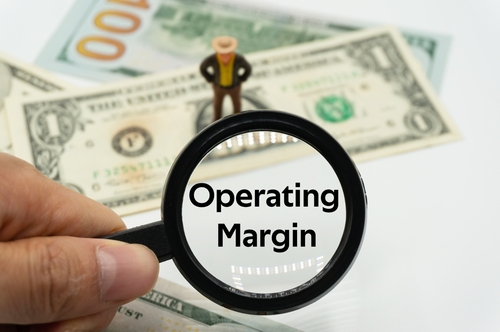 Corporate profits, according to the Bureau of Economic Analysis, grew by $20.4 billion in the final quarter of 2021, a 0.7 percent increase. For the first quarter of 2022, corporate profits fell by 2.3 percent or $66.4 billion. On an annualized basis, corporate profits fell 5.2 percent in 2022, but grew 25 percent in 2021. With the economy facing inflation, the uncertainty of the Russia/Ukraine conflict, and the world working its way out of the COVID-19 pandemic, economic uncertainty abounds. For companies, measuring margins is one way to evaluate performance and strategize ways to survive and thrive in a dynamic economy. Here are a few common margins that businesses can determine to measure their financial performance.



 The Cash Conversion Cycle, also known as the Net Operating Cycle, answers the question, “How many days does it take a company to pay for and generate cash from the sales of its inventory?” However, before an analysis like this can take place, it’s important to consider the company’s primary line of business.
 According to the January 2022 Future Forum Pulse survey, there’s been a shift in what workers want post-pandemic. The report found that in Q4 of 2021, 78 percent of workers from six industrialized companies wanted location flexibility. The survey also found that 95 percent desired schedule flexibility. This is in light of the same survey finding that 72 percent of employees desire greater flexibility from their current places of employment. Those same workers reported that if they can’t find more flexible arrangements, they would seek out another employer that provides greater flexibility – compared to 57 percent expressing the same desire in Q3 of 2021.
 According to the U.S. Small Business Administration and Project Equality, 60 percent of business owners plan to cash out of the business in the next 10 years. For the baby boomer generation, it’s especially important as they contemplate retirement, with this generation reportedly owning 2.3 million businesses. When it comes to getting a business ready for sale, there are many components to review and get organized before looking for prospective buyers.
 According to the U.S. Chamber of Commerce, the level of usage and data swirling around the internet is expanding at an accelerating pace. The amount of data on the internet globally during 2020 amounted to 3 trillion gigabytes; and 2022’s traffic is expected to increase to 4.5 trillion gigabytes. As a result, the U.S. Chamber of Commerce is concerned about the challenges American companies will have when it comes to business competitiveness.
 Yearly performance evaluations just might be heading out the door, according to a recent WorkHuman Analytics & Research Institute Survey. Findings reveal that these appraisals are less than effective and used less often. Based on select findings, 55 percent of employees responded that yearly evaluations don’t help them become better in their role. Almost as many, 53 percent, indicated that annual reviews recognize an employee’s complete workload. The survey also found that only 54 percent of businesses used annual reviews in 2019, compared to 82 percent of workers saying their employer used annual reviews in 2016.
 According to the U.S. Bureau of Labor Statistics (BLS), the Producer Price Index (PPI) or the increase in prices, goods and services that producers experienced for their input costs, saw a substantial rise, according to its latest report issued on Dec. 14.
 According to the job site Indeed, COVID-19 has taken a toll on workers even more in 2021, compared to 2020. The survey conducted by Indeed found that 52 percent of those surveyed felt “burned out” in 2021. Sixty-seven percent of those asked said that feeling burned out has become more pronounced as COVID-19 has progressed. It’s more noticeable among remote workers (38 percent), compared to 28 percent of employees working in person.
 According to a recent U.S. Travel Association forecast, only about one-third of companies are requiring their employees to travel. With business travel still at a low, how can companies develop a travel policy that reduces the risk of COVID-19?
 Based upon a recent McKinsey Global Survey, nearly 9 in 10 (87 percent) of management and above level respondents affirmed they are currently, or within the upcoming five years, dealing with the skill gap among their employees. With the vast majority of businesses experiencing or forecasting a skills-gap, how can they close or reduce this challenge?