Limit, Save, Grow Act of 2023 (HR 2811) – This bill was introduced in the House by Rep. Jodey Arrington (R-TX) on April 26. It would authorize and increase the federal debt limit as well as specific cuts in spending, such as repealed energy tax credits, expanded work requirements for the Supplemental Nutrition Assistance Program (SNAP) and other programs, and nullifies regulations for the cancellation of federal student loan debt. This bill passed in the House on April 26 but was not expected to pass in the Senate.
Pharmacy Benefit Manager Reform Act (S 1339) – Co-sponsored by three Republicans, this bipartisan bill would provide for increased oversight of benefits managers that provide pharmacy management services on behalf of health insurers and employer health plans. The bill was introduced by Sen. Bernie Sanders (D-VT) on April 27. A committee report was ordered and returned on May 11, where it awaits assessment by the full Senate.
Fire Suppression and Response Funding Assurance Act (S 479) – This bill is designed to ensure that pre-deployed state and local fire suppression assets are eligible for FEMA’s Fire Management Assistance Grants (FMAG) in an effort to improve the federal government’s response to wildfire disasters. It would adjust the cost share for fire management assistance to no less than 75 percent of the eligible cost. The bill was introduced on March 14 by Sen. Alex Padilla (D-CA). A committee issued its report on the bill on March 29 and it is currently under consideration in the Senate.
National Weather Service Communications Improvement Act (S 1414) – This bill is designed to improve the instant messaging service used by the National Weather Service, as well as other purposes. The bill was introduced by Sen. Maria Cantwell (D-WA) on May 3; its committee report was returned to the Senate on May 10, where it currently awaits review.
NWR Modernization Act of 2023 (S 1416) – Introduced by Sen. Maria Cantwell (D-WA) on May 3, this bill would authorize upgrading and modernizing the National Oceanic and Atmospheric Administration Weather Radio All Hazards Network. The Senate committee issued its report to the Senate on May 10, where it currently awaits review.
A joint resolution providing for congressional disapproval under chapter 8 of title 5, United States Code, of the rule submitted by the Environmental Protection Agency relating to “Control of Air Pollution From New Motor Vehicles: Heavy-Duty Engine and Vehicle Standards” (SJ 11) – This joint resolution nullifies the Environmental Protection Agency rule that pertains to the control of air pollution by new motor vehicles. The current rule sets high emission standards for heavy-duty engines and vehicles in order to reduce air pollution. The bill was introduced by Sen. Deb Fisher (R-NE) on Feb. 9 and passed in the Senate on April 26. It is currently awaiting review in the House.
Identifying and Eliminating Wasteful Programs Act (S 666) – Introduced on March 7 by Sen. Margaret Hassan (D-NH), this bill would require the Chief Operating Officer of each federal agency to compile a list of unnecessary programs. The assigned committee issued its report on March 29; it is currently awaiting review in the Senate.
Federal Agency Performance Act of 2023 (S 709) – This Act also is designed to improve performance and accountability within the Federal Government. It was introduced by Sen. Gary Peters (D-MI) on March 8. The assigned committee issued its report for this bill on March 29; it is also awaiting review in the Senate.
Increasing the Federal Debt Limit, Improving Disaster Resources and Attempting to Reduce Government Waste
June 1, 2023 · Blog, Congress at Work
⏱ 3 min read
Limit, Save, Grow Act of 2023 (HR 2811) – This bill was introduced in the House by Rep. Jodey Arrington (R-TX) on April 26. It would authorize and increase the federal debt limit as well as specific cuts in spending, such as repealed energy tax credits, expanded work requirements for the Supplemental Nutrition Assistance Program (SNAP) and other programs, and nullifies regulations for the cancellation of federal student loan debt. This bill passed in the House on April 26 but was not expected to pass in the Senate.
Pharmacy Benefit Manager Reform Act (S 1339) – Co-sponsored by three Republicans, this bipartisan bill would provide for increased oversight of benefits managers that provide pharmacy management services on behalf of health insurers and employer health plans. The bill was introduced by Sen. Bernie Sanders (D-VT) on April 27. A committee report was ordered and returned on May 11, where it awaits assessment by the full Senate.
Fire Suppression and Response Funding Assurance Act (S 479) – This bill is designed to ensure that pre-deployed state and local fire suppression assets are eligible for FEMA’s Fire Management Assistance Grants (FMAG) in an effort to improve the federal government’s response to wildfire disasters. It would adjust the cost share for fire management assistance to no less than 75 percent of the eligible cost. The bill was introduced on March 14 by Sen. Alex Padilla (D-CA). A committee issued its report on the bill on March 29 and it is currently under consideration in the Senate.
National Weather Service Communications Improvement Act (S 1414) – This bill is designed to improve the instant messaging service used by the National Weather Service, as well as other purposes. The bill was introduced by Sen. Maria Cantwell (D-WA) on May 3; its committee report was returned to the Senate on May 10, where it currently awaits review.
NWR Modernization Act of 2023 (S 1416) – Introduced by Sen. Maria Cantwell (D-WA) on May 3, this bill would authorize upgrading and modernizing the National Oceanic and Atmospheric Administration Weather Radio All Hazards Network. The Senate committee issued its report to the Senate on May 10, where it currently awaits review.
A joint resolution providing for congressional disapproval under chapter 8 of title 5, United States Code, of the rule submitted by the Environmental Protection Agency relating to “Control of Air Pollution From New Motor Vehicles: Heavy-Duty Engine and Vehicle Standards” (SJ 11) – This joint resolution nullifies the Environmental Protection Agency rule that pertains to the control of air pollution by new motor vehicles. The current rule sets high emission standards for heavy-duty engines and vehicles in order to reduce air pollution. The bill was introduced by Sen. Deb Fisher (R-NE) on Feb. 9 and passed in the Senate on April 26. It is currently awaiting review in the House.
Identifying and Eliminating Wasteful Programs Act (S 666) – Introduced on March 7 by Sen. Margaret Hassan (D-NH), this bill would require the Chief Operating Officer of each federal agency to compile a list of unnecessary programs. The assigned committee issued its report on March 29; it is currently awaiting review in the Senate.
Federal Agency Performance Act of 2023 (S 709) – This Act also is designed to improve performance and accountability within the Federal Government. It was introduced by Sen. Gary Peters (D-MI) on March 8. The assigned committee issued its report for this bill on March 29; it is also awaiting review in the Senate.
Disclaimer
These articles provide general information on tax, accounting, and financial topics for small businesses and individuals. They are educational in nature and are not specific legal, accounting, financial, tax, or other professional advice, and should not be relied upon as such. This content was prepared by Service2Client and may have been reviewed or edited by the website owner for accuracy and compliance. Look for a trust mark below for verification details. No representation is made that any approach described will achieve a particular result, and no regulatory or professional body has reviewed or endorsed this content. Because each situation is different, readers should consult a qualified professional about their specific circumstances before acting. Images accompanying these articles are protected by copyright and may not be copied or reused.
According to a 2022 Allied Market Research report, the size of the global forensic accounting market is forecast to increase in value to $11.68 billion in 2031, up from its 2021 estimated value of $5.13 billion. Allied Market Research puts this compound annual growth rate at nearly 9 percent (8.8 percent). This same report found that the Covid-19 pandemic saw an uptick in the need for forensic accounting skilled professionals and approaches.
Forensic accounting is a specialization within the general accounting profession. Professionals in this specialized subset focus on allegations of financial fraud brought by individuals and businesses in the civil courts and government agencies in the criminal courts. Disputes can range from family members contesting assets and valuations of such assets in an estate, business, or divorce proceedings. When it comes to proving criminal allegations, government agencies look to forensic accountants to investigate financial records for evidence of fraud in the quest to prove crimes such as securities fraud or identity theft.
Forensic Accounting Methodology
According to the Journal of Accountancy and the Association of Certified Fraud Examiners (ACFE), CPAs and specifically forensic accountants can use Benford’s Law to begin the process of identifying potential fraud. Examples of data sets that forensic accountants can build and analyze come from income statements, expense reports, ledgers, balance sheets, invoice and inventory data, accounts payable, and accounts receivable. When analyzing the leading or first digit in a data set, forensic investigators can take the data set and look at how the leading digits are distributed against the percentages that Benford’s Law sets out.
According to the ACFE, in contrast to the common belief that digits occur in equal probability, Benford’s Law states that numbers starting with 1 as the first digit occurs with the highest frequency. Then each subsequent number 2 through 9 occurs with lower probability. According to Carnegie Mellon University, per Benford’s Law, 30.1 percent of a data set will be led by a 1. The digit 2 will be the first in a data set 17.6 percent of the time. For numbers 3 to 9, the likelihood of each respective number leading the data set should become less frequent.
The ACFE gives the example of a counting exercise to illustrate Benford’s Law. When counting to 25, only one of the 25 numbers would lead with a 3; seven numbers would lead with a 2; and there would be 11 leading numbers beginning with 1. Numbers generated by a computer would give equal weighted probability to 1 to 9 being the first or leading digit. If equally weighted numbers were in fact generated, the results would deviate from Benford’s Law. However, simply because Benford’s Law is not observed in the dataset analyzed, it doesn’t automatically mean fraud occurred. But it is a tool that helps forensic accountants investigate further and determine through additional means if fraud did, in fact, occur.
Similarly, the ACFE points out that if someone wants to commit a financial crime, they would generate invoices worth a lot. It would be a lot more effective for someone to pass off invoices of $800 or $900, versus smaller $100 or $200 amounts. While this would make better use of a criminal’s time, according to Benford’s Law, if a forensic accountant were to test a data set against a few hundred invoices, they might see an abnormal percentage of them with high leading numbers, prompting further investigation.
The Journal of Accountancy reminds readers that it’s important to keep in mind a few caveats. The more numbers available in the data set, the better. It can work with as few as 50 to 100 numbers, but more is always preferred. Another consideration, per the ACFE, is where the data comprising the data set originates. Using a sports analogy, if players are between 5 feet and 8 feet tall, it would make testing the data set against Benford’s Law impossible because there’s zero chance of numbers 1 through 4 and 8 or 9 showing up in a probability test. In these scenarios, Benford’s Law wouldn’t apply.
While the method for detecting financial fraud is not black and white, the need for more forensic accountants will not slow down any time soon.
According to a 2022 Allied Market Research report, the size of the global forensic accounting market is forecast to increase in value to $11.68 billion in 2031, up from its 2021 estimated value of $5.13 billion. Allied Market Research puts this compound annual growth rate at nearly 9 percent (8.8 percent). This same report found that the Covid-19 pandemic saw an uptick in the need for forensic accounting skilled professionals and approaches.
Forensic accounting is a specialization within the general accounting profession. Professionals in this specialized subset focus on allegations of financial fraud brought by individuals and businesses in the civil courts and government agencies in the criminal courts. Disputes can range from family members contesting assets and valuations of such assets in an estate, business, or divorce proceedings. When it comes to proving criminal allegations, government agencies look to forensic accountants to investigate financial records for evidence of fraud in the quest to prove crimes such as securities fraud or identity theft.
Forensic Accounting Methodology
According to the Journal of Accountancy and the Association of Certified Fraud Examiners (ACFE), CPAs and specifically forensic accountants can use Benford’s Law to begin the process of identifying potential fraud. Examples of data sets that forensic accountants can build and analyze come from income statements, expense reports, ledgers, balance sheets, invoice and inventory data, accounts payable, and accounts receivable. When analyzing the leading or first digit in a data set, forensic investigators can take the data set and look at how the leading digits are distributed against the percentages that Benford’s Law sets out.
According to the ACFE, in contrast to the common belief that digits occur in equal probability, Benford’s Law states that numbers starting with 1 as the first digit occurs with the highest frequency. Then each subsequent number 2 through 9 occurs with lower probability. According to Carnegie Mellon University, per Benford’s Law, 30.1 percent of a data set will be led by a 1. The digit 2 will be the first in a data set 17.6 percent of the time. For numbers 3 to 9, the likelihood of each respective number leading the data set should become less frequent.
The ACFE gives the example of a counting exercise to illustrate Benford’s Law. When counting to 25, only one of the 25 numbers would lead with a 3; seven numbers would lead with a 2; and there would be 11 leading numbers beginning with 1. Numbers generated by a computer would give equal weighted probability to 1 to 9 being the first or leading digit. If equally weighted numbers were in fact generated, the results would deviate from Benford’s Law. However, simply because Benford’s Law is not observed in the dataset analyzed, it doesn’t automatically mean fraud occurred. But it is a tool that helps forensic accountants investigate further and determine through additional means if fraud did, in fact, occur.
Similarly, the ACFE points out that if someone wants to commit a financial crime, they would generate invoices worth a lot. It would be a lot more effective for someone to pass off invoices of $800 or $900, versus smaller $100 or $200 amounts. While this would make better use of a criminal’s time, according to Benford’s Law, if a forensic accountant were to test a data set against a few hundred invoices, they might see an abnormal percentage of them with high leading numbers, prompting further investigation.
The Journal of Accountancy reminds readers that it’s important to keep in mind a few caveats. The more numbers available in the data set, the better. It can work with as few as 50 to 100 numbers, but more is always preferred. Another consideration, per the ACFE, is where the data comprising the data set originates. Using a sports analogy, if players are between 5 feet and 8 feet tall, it would make testing the data set against Benford’s Law impossible because there’s zero chance of numbers 1 through 4 and 8 or 9 showing up in a probability test. In these scenarios, Benford’s Law wouldn’t apply.
While the method for detecting financial fraud is not black and white, the need for more forensic accountants will not slow down any time soon.
These articles provide general information on tax, accounting, and financial topics for small businesses and individuals. They are educational in nature and are not specific legal, accounting, financial, tax, or other professional advice, and should not be relied upon as such. This content was prepared by Service2Client and may have been reviewed or edited by the website owner for accuracy and compliance. Look for a trust mark below for verification details. No representation is made that any approach described will achieve a particular result, and no regulatory or professional body has reviewed or endorsed this content. Because each situation is different, readers should consult a qualified professional about their specific circumstances before acting. Images accompanying these articles are protected by copyright and may not be copied or reused.
When it comes to businesses looking to mitigate risk, one concept that’s important to explore is reproduction costs. The first step is to distinguish between reproduction and replacement costs. Replacement cost refers to how much it would cost a company to replace an asset that will duplicate the performance of the beginning asset; however, it does not necessarily have to meet the same materials, specifications, etc. Reproduction cost refers to how much it would cost a company to reproduce the asset so that it’s constructed of the same materials, specifications, etc., based on current market prices.
When looking to assess real estate accurately, the cost approach examines how much a builder would need to spend on the land and building outlays to replicate the original building and its functionality. This looks at what the current market conditions would assess the land for and the construction/development costs on said land. From there, it removes depreciation to obtain its property value.
It’s expressed as follows:
Property Value = Replacement / Reproduction Cost – Depreciation + Land Value
The first step is to determine the structure’s reproduction and replacement costs. The Replacement Method looks at expenses that would be incurred to build a structure featuring the same usefulness as the building under review, constructed with present-day raw materials, blueprints, specifications, etc. The Reproduction Method looks at how much it would cost to build an exact replica of the original structure, employing analogous inputs and building standards. It also requires adhering to historically accurate conventions and blueprints. Naturally, when comparing a historic property to a recent building, there would be a greater divergence between replacement and reproduction costs.
Depreciation of improvements for the next step must be estimated. This is defined as the difference between the value of renovations and the current contributing value of them, which is measured in three ways:
How much has the building physically deteriorated?
How much has the building has fallen out of favor with real estate purchasers over time?
How much value has the building lost due to factors beyond itself? Examples include deteriorating local economic conditions, recent and lasting environmental contamination, etc.
After calculating the three conditions in the aforementioned questions, the resulting figure is the accrued depreciation. This step entails looking at current property values to ascertain a competitive worth for the land. This can be referred to as the Estimated Assessed Value of Land to give the value a name.
From there, the accrued depreciation must be taken off the value of either the replacement cost or reproduction cost. It’s expressed as follows:
Replacement Cost or Reproduction Cost (either can be selected depending on the desired outcome) – Accrued Depreciation
The resulting figure is referred to as the Depreciated Cost of the Structure.
Once the Accrued Depreciation is accounted for, the land’s estimated assessed value must be added to the Depreciated Cost of the Structure figure. It is calculated as follows:
Completed Estimate of Real Estate = Depreciated Cost of the Structure + Estimated Assessed Value of Land
Contemplating the Cost Approach’s Drawbacks
One concern is that if there’s a problem finding the right lot, the parcel’s valuation might not reflect its true worth. Zoning or land-use restrictions can reduce the attractiveness of a parcel of land, thereby lowering its value. When it comes to calculating depreciation for older properties, age could skew the value estimate. For example, with construction materials for certain items may not be available anymore, making the calculation subject to interpretation.
Understanding how different cost assessments work allows business owners to make decisions that benefit their customers and their bottom line.
Defining and Understanding Reproduction Costs
May 1, 2023 · Blog, General Business News
⏱ 4 min read
When it comes to businesses looking to mitigate risk, one concept that’s important to explore is reproduction costs. The first step is to distinguish between reproduction and replacement costs. Replacement cost refers to how much it would cost a company to replace an asset that will duplicate the performance of the beginning asset; however, it does not necessarily have to meet the same materials, specifications, etc. Reproduction cost refers to how much it would cost a company to reproduce the asset so that it’s constructed of the same materials, specifications, etc., based on current market prices.
When looking to assess real estate accurately, the cost approach examines how much a builder would need to spend on the land and building outlays to replicate the original building and its functionality. This looks at what the current market conditions would assess the land for and the construction/development costs on said land. From there, it removes depreciation to obtain its property value.
It’s expressed as follows:
Property Value = Replacement / Reproduction Cost – Depreciation + Land Value
The first step is to determine the structure’s reproduction and replacement costs. The Replacement Method looks at expenses that would be incurred to build a structure featuring the same usefulness as the building under review, constructed with present-day raw materials, blueprints, specifications, etc. The Reproduction Method looks at how much it would cost to build an exact replica of the original structure, employing analogous inputs and building standards. It also requires adhering to historically accurate conventions and blueprints. Naturally, when comparing a historic property to a recent building, there would be a greater divergence between replacement and reproduction costs.
Depreciation of improvements for the next step must be estimated. This is defined as the difference between the value of renovations and the current contributing value of them, which is measured in three ways:
How much has the building physically deteriorated?
How much has the building has fallen out of favor with real estate purchasers over time?
How much value has the building lost due to factors beyond itself? Examples include deteriorating local economic conditions, recent and lasting environmental contamination, etc.
After calculating the three conditions in the aforementioned questions, the resulting figure is the accrued depreciation. This step entails looking at current property values to ascertain a competitive worth for the land. This can be referred to as the Estimated Assessed Value of Land to give the value a name.
From there, the accrued depreciation must be taken off the value of either the replacement cost or reproduction cost. It’s expressed as follows:
Replacement Cost or Reproduction Cost (either can be selected depending on the desired outcome) – Accrued Depreciation
The resulting figure is referred to as the Depreciated Cost of the Structure.
Once the Accrued Depreciation is accounted for, the land’s estimated assessed value must be added to the Depreciated Cost of the Structure figure. It is calculated as follows:
Completed Estimate of Real Estate = Depreciated Cost of the Structure + Estimated Assessed Value of Land
Contemplating the Cost Approach’s Drawbacks
One concern is that if there’s a problem finding the right lot, the parcel’s valuation might not reflect its true worth. Zoning or land-use restrictions can reduce the attractiveness of a parcel of land, thereby lowering its value. When it comes to calculating depreciation for older properties, age could skew the value estimate. For example, with construction materials for certain items may not be available anymore, making the calculation subject to interpretation.
Understanding how different cost assessments work allows business owners to make decisions that benefit their customers and their bottom line.
Disclaimer
These articles provide general information on tax, accounting, and financial topics for small businesses and individuals. They are educational in nature and are not specific legal, accounting, financial, tax, or other professional advice, and should not be relied upon as such. This content was prepared by Service2Client and may have been reviewed or edited by the website owner for accuracy and compliance. Look for a trust mark below for verification details. No representation is made that any approach described will achieve a particular result, and no regulatory or professional body has reviewed or endorsed this content. Because each situation is different, readers should consult a qualified professional about their specific circumstances before acting. Images accompanying these articles are protected by copyright and may not be copied or reused.
The internet keeps evolving. It started with static web pages in Web 1.0 before evolving to interactive and dynamic content in Web 2.0. A new phase of technology is now introducing Web 3.0, or the third generation of The World Wide Web. Although it is a work in progress, it is necessary to understand the new concept and how it will impact the future of online interactions.
What is Web 3.0?
Web 3.0 is a term used to describe the next generation of the internet. Industry experts consider it the next big thing in the evolution of the The Web after Web 2.0. Web 2.0 refers to the Internet era characterized by user-generated content, social networking, and interactive web applications; it is known mainly as the Internet of Information.
Web 3.0, on the other hand, is built on top of the existing infrastructure; however, it introduces new technologies that enable computers to interpret data in a more human-centered manner. It combines disruptive technologies such as blockchain, augmented reality, virtual reality, edge computing, IoT, etc. As a result, the internet will become a more intelligent and efficient tool for finding and processing information.
Web 3.0 is also referred to as the semantic web or decentralized web and aims to create a more meaningful online experience by integrating artificial intelligence (AI), decentralized networks, and semantic understanding.
Key Features of Web 3.0
Decentralization
Web 3.0 makes good the move toward decentralization. Decentralization implies that instead of relying on central authorities, data is simultaneously stored in multiple locations. Since Web 3.0 is built on decentralized networks, such as blockchain technology, it creates a more transparent, secure, and trusted web and gives users more control over their data.
Artificial Intelligence and Machine Learning
Web 3.0 will enable computers to comprehend information similar to the way humans do, using semantic web concepts and natural language processing. It also will utilize machine learning – technology that employs data and algorithms to imitate human learning and enhance accuracy. Web 3.0 is designed to leverage the power of artificial intelligence (AI), making web applications more intelligent and enhancing their capacity to make informed decisions. It also helps automate tasks, improve efficiency, and provide more personalized experiences for users.
Ubiquity and Connectivity
The rise of the Internet of Things (IoT) is another contributing factor, enabling information and content to be more connected and ubiquitous. It also means data is accessible via multiple applications and devices.
3D Visualization
Using augmented reality, virtual reality, and mixed reality combined with technologies such as IoT makes it possible to create a spatial web. This helps maintain real-life scale and experience on the web. A good example is the application of VR technology in e-commerce.
Openness and Accessibility
Web 3.0 is built on open standards and protocols, which make it more accessible to both developers and users. This promotes innovation and collaboration across different sectors and communities.
The Impact of Web 3.0 and Challenges
Web 3.0 will significantly change how users interact with information online and transform different aspects of life, including commerce, health, and education, among others. For instance, decentralization gives users greater control over their personal data. This might help limit the collection of data without user consent or compensation.
With blockchain technology as a foundation of Web 3.0, the data becomes immutable, transparent, and hard to hack. This is because all transactions will use self-executing smart contracts.
Web 3.0 will usher in a new era of automation as intelligent systems and algorithms become increasingly integrated into online experiences. This will include more intelligent chatbots, personalized recommendations, sophisticated predictive analytics, and autonomous systems.
As a result, there will be an improved user experience. Users will have a more personalized and interactive experience online, with applications that can better understand their needs and preferences.
Despite the impressive positive impact, Web 3.0 is still in its early emerging stage and is not without challenges. As more significant work and effort are being put toward its actualization, several issues must be addressed. First, to facilitate specific user functions, additional layers must be built on top of the blockchain to ease its complex operations.
Secondly, decentralization introduces data governance and regulation concerns. With no central control of data, bad actors can take advantage to promote hate speech, misinformation and cybercrime.
Thirdly, this new iteration of the internet also requires implementing new technologies and using advanced devices.
Conclusion
The evolution of the internet is inevitable. Although more effort is still required to realize the full potential of Web 3.0, business leaders should be aware of new developments to ensure they can take advantage of opportunities presented by the spatial web and venture into new avenues to remain competitive.
What Is Web 3.0? Understanding The Next Generation of the Internet
May 1, 2023 · Blog, What's New in Technology
⏱ 4 min read
The internet keeps evolving. It started with static web pages in Web 1.0 before evolving to interactive and dynamic content in Web 2.0. A new phase of technology is now introducing Web 3.0, or the third generation of The World Wide Web. Although it is a work in progress, it is necessary to understand the new concept and how it will impact the future of online interactions.
What is Web 3.0?
Web 3.0 is a term used to describe the next generation of the internet. Industry experts consider it the next big thing in the evolution of the The Web after Web 2.0. Web 2.0 refers to the Internet era characterized by user-generated content, social networking, and interactive web applications; it is known mainly as the Internet of Information.
Web 3.0, on the other hand, is built on top of the existing infrastructure; however, it introduces new technologies that enable computers to interpret data in a more human-centered manner. It combines disruptive technologies such as blockchain, augmented reality, virtual reality, edge computing, IoT, etc. As a result, the internet will become a more intelligent and efficient tool for finding and processing information.
Web 3.0 is also referred to as the semantic web or decentralized web and aims to create a more meaningful online experience by integrating artificial intelligence (AI), decentralized networks, and semantic understanding.
Key Features of Web 3.0
Decentralization
Web 3.0 makes good the move toward decentralization. Decentralization implies that instead of relying on central authorities, data is simultaneously stored in multiple locations. Since Web 3.0 is built on decentralized networks, such as blockchain technology, it creates a more transparent, secure, and trusted web and gives users more control over their data.
Artificial Intelligence and Machine Learning
Web 3.0 will enable computers to comprehend information similar to the way humans do, using semantic web concepts and natural language processing. It also will utilize machine learning – technology that employs data and algorithms to imitate human learning and enhance accuracy. Web 3.0 is designed to leverage the power of artificial intelligence (AI), making web applications more intelligent and enhancing their capacity to make informed decisions. It also helps automate tasks, improve efficiency, and provide more personalized experiences for users.
Ubiquity and Connectivity
The rise of the Internet of Things (IoT) is another contributing factor, enabling information and content to be more connected and ubiquitous. It also means data is accessible via multiple applications and devices.
3D Visualization
Using augmented reality, virtual reality, and mixed reality combined with technologies such as IoT makes it possible to create a spatial web. This helps maintain real-life scale and experience on the web. A good example is the application of VR technology in e-commerce.
Openness and Accessibility
Web 3.0 is built on open standards and protocols, which make it more accessible to both developers and users. This promotes innovation and collaboration across different sectors and communities.
The Impact of Web 3.0 and Challenges
Web 3.0 will significantly change how users interact with information online and transform different aspects of life, including commerce, health, and education, among others. For instance, decentralization gives users greater control over their personal data. This might help limit the collection of data without user consent or compensation.
With blockchain technology as a foundation of Web 3.0, the data becomes immutable, transparent, and hard to hack. This is because all transactions will use self-executing smart contracts.
Web 3.0 will usher in a new era of automation as intelligent systems and algorithms become increasingly integrated into online experiences. This will include more intelligent chatbots, personalized recommendations, sophisticated predictive analytics, and autonomous systems.
As a result, there will be an improved user experience. Users will have a more personalized and interactive experience online, with applications that can better understand their needs and preferences.
Despite the impressive positive impact, Web 3.0 is still in its early emerging stage and is not without challenges. As more significant work and effort are being put toward its actualization, several issues must be addressed. First, to facilitate specific user functions, additional layers must be built on top of the blockchain to ease its complex operations.
Secondly, decentralization introduces data governance and regulation concerns. With no central control of data, bad actors can take advantage to promote hate speech, misinformation and cybercrime.
Thirdly, this new iteration of the internet also requires implementing new technologies and using advanced devices.
Conclusion
The evolution of the internet is inevitable. Although more effort is still required to realize the full potential of Web 3.0, business leaders should be aware of new developments to ensure they can take advantage of opportunities presented by the spatial web and venture into new avenues to remain competitive.
Disclaimer
These articles provide general information on tax, accounting, and financial topics for small businesses and individuals. They are educational in nature and are not specific legal, accounting, financial, tax, or other professional advice, and should not be relied upon as such. This content was prepared by Service2Client and may have been reviewed or edited by the website owner for accuracy and compliance. Look for a trust mark below for verification details. No representation is made that any approach described will achieve a particular result, and no regulatory or professional body has reviewed or endorsed this content. Because each situation is different, readers should consult a qualified professional about their specific circumstances before acting. Images accompanying these articles are protected by copyright and may not be copied or reused.
Relating to a national emergency declared by the President on March 13, 2020 (HJ Res 7) – On March 13, 2020, then-President Trump declared a national emergency relating to the COVID-19 pandemic. Since then, emergency status has continued until the passage of this resolution. The national emergency status relaxed many healthcare rules, such as training mandates for nursing home aides, easier access to certain prescribed medications (e.g., Adderall, Ritalin, oxycodone, buprenorphine), and utilization of uncredentialed nurse practitioners and physician assistants for hospitalized Medicare patients. The resolution to end emergency status passed in the House on Feb. 1 and Senate on March 29. The resolution was introduced by Rep. Paul Gosar (R-AZ) on Jan. 9 and enacted by President Biden on April 10.
Wounded Warrior Access Act (HR 1226) – This bill requires the Department of Veterans Affairs (VA) to respond to online requests by claimants for records related to VA claims and benefits. The VA must notify a requester within 10 days that their request has been received and fulfill the request within 120 days. The bill was introduced by Rep. Pete Aguilar (D-CA) on Feb. 28 and passed in the House on March 7. It currently resides in the Senate.
Veterans’ COLA Act of 2023 (S 777) – Effective Dec. 1, 2023, this bipartisan bill would increase the rates of compensation for veterans with service-connected disabilities as well as dependency and indemnity compensation for the survivors of certain disabled veterans. The bill was introduced on March 14 by Sen. Jon Tester (D-MT). It passed in the Senate on March 30 and is currently under consideration in the House.
Understanding Cybersecurity of Mobile Networks Act (HR 1123) – Introduced by Rep. Anna Ashoo (D-CA) on Feb. 21, this bill would require the National Telecommunications and Information Administration to report on the cybersecurity vulnerability of mobile service networks and mobile devices to cyberattacks and surveillance by adversaries. The bill was passed unanimously in the House on March 7; its fate currently resides in the Senate.
Lower Energy Costs Act (HR 1) – This bill is designed to reduce energy costs by increasing American energy production, exports, infrastructure, and critical minerals processing by implementing transparency, accountability, and permitting rules as well as improving water quality certification and expediting energy projects. The bill was introduced by Rep. Steve Scalise (R-LA) on Jan. 26 and passed in the House on March 30. It is currently awaiting review in the Senate.
SECURE Notarization Act of 2023 (HR 1059) – This bipartisan legislation was introduced in the House by Rep. Kelly Armstrong (R-ND) on Feb. 17. It would permit notaries public to notarize electronic records and perform notarizations for remotely located individuals. The bill provides technical requirements, including creating and retaining video and audio recordings to conduct the transaction. Additionally, the bill would require all U.S. courts and states to recognize in-person and remoted notarizations affecting interstate commerce. The bill also allows a notary public to remotely notarize electronic records involving an individual located outside of the United States, subject to certain requirements. The bill passed in the House on Feb. 27 and is currently under consideration in the Senate.
Shoring Up Services for Veterans, Energy Production and Cybersecurity Risks
May 1, 2023 · Blog, Congress at Work
⏱ 3 min read
Relating to a national emergency declared by the President on March 13, 2020 (HJ Res 7) – On March 13, 2020, then-President Trump declared a national emergency relating to the COVID-19 pandemic. Since then, emergency status has continued until the passage of this resolution. The national emergency status relaxed many healthcare rules, such as training mandates for nursing home aides, easier access to certain prescribed medications (e.g., Adderall, Ritalin, oxycodone, buprenorphine), and utilization of uncredentialed nurse practitioners and physician assistants for hospitalized Medicare patients. The resolution to end emergency status passed in the House on Feb. 1 and Senate on March 29. The resolution was introduced by Rep. Paul Gosar (R-AZ) on Jan. 9 and enacted by President Biden on April 10.
Wounded Warrior Access Act (HR 1226) – This bill requires the Department of Veterans Affairs (VA) to respond to online requests by claimants for records related to VA claims and benefits. The VA must notify a requester within 10 days that their request has been received and fulfill the request within 120 days. The bill was introduced by Rep. Pete Aguilar (D-CA) on Feb. 28 and passed in the House on March 7. It currently resides in the Senate.
Veterans’ COLA Act of 2023 (S 777) – Effective Dec. 1, 2023, this bipartisan bill would increase the rates of compensation for veterans with service-connected disabilities as well as dependency and indemnity compensation for the survivors of certain disabled veterans. The bill was introduced on March 14 by Sen. Jon Tester (D-MT). It passed in the Senate on March 30 and is currently under consideration in the House.
Understanding Cybersecurity of Mobile Networks Act (HR 1123) – Introduced by Rep. Anna Ashoo (D-CA) on Feb. 21, this bill would require the National Telecommunications and Information Administration to report on the cybersecurity vulnerability of mobile service networks and mobile devices to cyberattacks and surveillance by adversaries. The bill was passed unanimously in the House on March 7; its fate currently resides in the Senate.
Lower Energy Costs Act (HR 1) – This bill is designed to reduce energy costs by increasing American energy production, exports, infrastructure, and critical minerals processing by implementing transparency, accountability, and permitting rules as well as improving water quality certification and expediting energy projects. The bill was introduced by Rep. Steve Scalise (R-LA) on Jan. 26 and passed in the House on March 30. It is currently awaiting review in the Senate.
SECURE Notarization Act of 2023 (HR 1059) – This bipartisan legislation was introduced in the House by Rep. Kelly Armstrong (R-ND) on Feb. 17. It would permit notaries public to notarize electronic records and perform notarizations for remotely located individuals. The bill provides technical requirements, including creating and retaining video and audio recordings to conduct the transaction. Additionally, the bill would require all U.S. courts and states to recognize in-person and remoted notarizations affecting interstate commerce. The bill also allows a notary public to remotely notarize electronic records involving an individual located outside of the United States, subject to certain requirements. The bill passed in the House on Feb. 27 and is currently under consideration in the Senate.
Disclaimer
These articles provide general information on tax, accounting, and financial topics for small businesses and individuals. They are educational in nature and are not specific legal, accounting, financial, tax, or other professional advice, and should not be relied upon as such. This content was prepared by Service2Client and may have been reviewed or edited by the website owner for accuracy and compliance. Look for a trust mark below for verification details. No representation is made that any approach described will achieve a particular result, and no regulatory or professional body has reviewed or endorsed this content. Because each situation is different, readers should consult a qualified professional about their specific circumstances before acting. Images accompanying these articles are protected by copyright and may not be copied or reused.
So, you filed and paid all your taxes on the money you earned in 2021. Now, the company you work for finds itself in trouble, and you are forced to pay back part of your compensation. The big question is, will the IRS refund you for the taxes you already paid related to this compensation? While this seems like a bizarre scenario at first glance, it is more common than you might think.
Reducing or holding back compensation that hasn’t been earned yet is easy. Simply pay an executive or employee less, or don’t grant the stock option or bonus. Just don’t pay it.
Things get tricky in a situation where compensation has already been paid and needs to be reversed. This is much, much tougher. If you are still within the same calendar year, then logistically, it’s easier to make an adjustment; but unwinding compensation already awarded is never simple or easy.
Requiring an employee to pay back compensation is not as uncommon as many think. The situation can be as simple as receiving a signing bonus with the stipulation to stay at least a year. IRS treatment of repaid compensation depends on the details.
Details on Compensation Clawbacks
The answer to the core question can vary, with the legal context and timing being the biggest drivers. For example, both Dodd-Frank and the Consumer Protection Act grant regulatory authority to mandate clawbacks, even in cases where the taxpayer was unaware of any wrongdoing. The Sarbanes-Oxlet Act has its own set of clawback regulations. In cases such as this, there is the possibility, due to legal concerns, that a refund is not due to the taxpayer.
Generally, in cases of contractual issues, the IRS doesn’t allow a taxpayer to undo an economic event as if it never happened. The general exception to this rule is if you receive and give back the same compensation within the same calendar year. The problem, however, is that clawbacks usually come in later years after a tax return has been filed.
If you are still employed at the same company, they could simply agree to reduce your current year salary. If you are a former employee, things get tricker. You also have the possibility of amending a prior tax return in some cases. Unfortunately, many people find themselves in a situation where they need to claim a tax refund under Section 1341 of the tax code.
Section 1341 is based on the claim of right doctrine and attempts to put a taxpayer in the same position he or she would have been in had they never received the income. To qualify for and file under this provision, the taxpayer must have included money in income in the prior year because they had an unrestricted right to it at that time and then later learned they did not have an unrestricted right to it after all, therefore having to give it back.
Conclusion
The rules and regulations around the taxability of compensation required to be repaid is not simple. While the core issue of whether one is voluntary or mandatory, givebacks almost always create tax problems. If you ever find yourself in a situation where you have to return a material amount of compensation, no matter what the source, it’s best to reach out to your trusted tax adviser for help navigating the complexities.
I Needed to Repay Part of My Compensation; Will I Get a Refund on My Taxes?
May 1, 2023 · Blog, Tax and Financial News
⏱ 3 min read
So, you filed and paid all your taxes on the money you earned in 2021. Now, the company you work for finds itself in trouble, and you are forced to pay back part of your compensation. The big question is, will the IRS refund you for the taxes you already paid related to this compensation? While this seems like a bizarre scenario at first glance, it is more common than you might think.
Reducing or holding back compensation that hasn’t been earned yet is easy. Simply pay an executive or employee less, or don’t grant the stock option or bonus. Just don’t pay it.
Things get tricky in a situation where compensation has already been paid and needs to be reversed. This is much, much tougher. If you are still within the same calendar year, then logistically, it’s easier to make an adjustment; but unwinding compensation already awarded is never simple or easy.
Requiring an employee to pay back compensation is not as uncommon as many think. The situation can be as simple as receiving a signing bonus with the stipulation to stay at least a year. IRS treatment of repaid compensation depends on the details.
Details on Compensation Clawbacks
The answer to the core question can vary, with the legal context and timing being the biggest drivers. For example, both Dodd-Frank and the Consumer Protection Act grant regulatory authority to mandate clawbacks, even in cases where the taxpayer was unaware of any wrongdoing. The Sarbanes-Oxlet Act has its own set of clawback regulations. In cases such as this, there is the possibility, due to legal concerns, that a refund is not due to the taxpayer.
Generally, in cases of contractual issues, the IRS doesn’t allow a taxpayer to undo an economic event as if it never happened. The general exception to this rule is if you receive and give back the same compensation within the same calendar year. The problem, however, is that clawbacks usually come in later years after a tax return has been filed.
If you are still employed at the same company, they could simply agree to reduce your current year salary. If you are a former employee, things get tricker. You also have the possibility of amending a prior tax return in some cases. Unfortunately, many people find themselves in a situation where they need to claim a tax refund under Section 1341 of the tax code.
Section 1341 is based on the claim of right doctrine and attempts to put a taxpayer in the same position he or she would have been in had they never received the income. To qualify for and file under this provision, the taxpayer must have included money in income in the prior year because they had an unrestricted right to it at that time and then later learned they did not have an unrestricted right to it after all, therefore having to give it back.
Conclusion
The rules and regulations around the taxability of compensation required to be repaid is not simple. While the core issue of whether one is voluntary or mandatory, givebacks almost always create tax problems. If you ever find yourself in a situation where you have to return a material amount of compensation, no matter what the source, it’s best to reach out to your trusted tax adviser for help navigating the complexities.
Disclaimer
These articles provide general information on tax, accounting, and financial topics for small businesses and individuals. They are educational in nature and are not specific legal, accounting, financial, tax, or other professional advice, and should not be relied upon as such. This content was prepared by Service2Client and may have been reviewed or edited by the website owner for accuracy and compliance. Look for a trust mark below for verification details. No representation is made that any approach described will achieve a particular result, and no regulatory or professional body has reviewed or endorsed this content. Because each situation is different, readers should consult a qualified professional about their specific circumstances before acting. Images accompanying these articles are protected by copyright and may not be copied or reused.
Now that spring is here, it might be a great time to give your finances a fresh look. Here are a few key items to put on your May to-do list.
Say Bye-Bye to PMI
If you bought your home for less than 20 percent down, there’s a good chance you’ve been paying private mortgage insurance (aka PMI) on your loan, which is usually an extra 1 percent of what you paid. But here’s the good news: the rise in home prices over the past few years has meant one thing — a bump in your home equity. If your equity position is now at least 20 percent of the original purchase price, you might not have to keep paying your PMI. All you need to do is contact the company that services your mortgage and check things out. You might have to pay several hundred dollars for a new appraisal, but when you compare it to the thousands you could save in a year, it’s well worth it.
Take Advantage of 529 Day
That would be May 29, a day that has been reserved to remind parents of future college students to start saving in a tax-advantaged 529 savings account. Here’s how it works: whatever amount you put in it grows tax-free. And better still, you won’t pay any taxes on withdrawals used to pay for qualified college expenses. You can also use up to $10,000 tax-free for qualified K-12 expenses. How sweet is that?
Get Rid of Unnecessary Financial Documents
Do you have stacks of old tax returns, bill stubs, and old ATM and bank deposit receipts collecting dust inside your filing cabinet? If so, spring is a good time to go through and shred them. For instance, you can toss tax returns after 10 years and ATM and bank receipts after just one year. If you don’t have a shredder, check to see if and when your city holds free shredding days. And don’t forget about your computer, external drives, and mobile devices that also might be getting full. A great resource to securely delete your personal documents is Eraser, a free software program for PCs. Last but not least, clean out your phone. Take a few minutes to delete any unused apps. Digital spring cleaning is always a great idea.
Review Recurring Charges
Do you really need that magazine subscription? How about the channel you bought to watch a show but forgot to cancel? These are the kinds of small charges that can really add up — and cost you over time. Take a look at your credit card statements, give them a good once over, highlight the ones that can go, and then start the process of canceling. If you want to help streamline this process, check out free apps like Rocket Money and Trim. It’ll feel so good when you’re finished.
Budget for Home Improvement Projects
During May, especially Memorial Day, you can find big discounts on materials for all those projects around the house you want to dive into this summer. It’s best not to wait because prices can climb in June and July. If you’re thinking of bigger projects like putting in a deck or repairing your roof, you might need help. That’s why buying the materials in May could help you stretch your budget when it’s time to hire people to do the work. Even if you aren’t 100 percent ready to get started, you can still measure how much decking or roofing you’ll need and take advantage of holiday sales.
Whether you’re saving up, cleaning up or clearing out, May is a great month to take stock of your finances. Who knows? It might put a little spring in your step.
Now that spring is here, it might be a great time to give your finances a fresh look. Here are a few key items to put on your May to-do list.
Say Bye-Bye to PMI
If you bought your home for less than 20 percent down, there’s a good chance you’ve been paying private mortgage insurance (aka PMI) on your loan, which is usually an extra 1 percent of what you paid. But here’s the good news: the rise in home prices over the past few years has meant one thing — a bump in your home equity. If your equity position is now at least 20 percent of the original purchase price, you might not have to keep paying your PMI. All you need to do is contact the company that services your mortgage and check things out. You might have to pay several hundred dollars for a new appraisal, but when you compare it to the thousands you could save in a year, it’s well worth it.
Take Advantage of 529 Day
That would be May 29, a day that has been reserved to remind parents of future college students to start saving in a tax-advantaged 529 savings account. Here’s how it works: whatever amount you put in it grows tax-free. And better still, you won’t pay any taxes on withdrawals used to pay for qualified college expenses. You can also use up to $10,000 tax-free for qualified K-12 expenses. How sweet is that?
Get Rid of Unnecessary Financial Documents
Do you have stacks of old tax returns, bill stubs, and old ATM and bank deposit receipts collecting dust inside your filing cabinet? If so, spring is a good time to go through and shred them. For instance, you can toss tax returns after 10 years and ATM and bank receipts after just one year. If you don’t have a shredder, check to see if and when your city holds free shredding days. And don’t forget about your computer, external drives, and mobile devices that also might be getting full. A great resource to securely delete your personal documents is Eraser, a free software program for PCs. Last but not least, clean out your phone. Take a few minutes to delete any unused apps. Digital spring cleaning is always a great idea.
Review Recurring Charges
Do you really need that magazine subscription? How about the channel you bought to watch a show but forgot to cancel? These are the kinds of small charges that can really add up — and cost you over time. Take a look at your credit card statements, give them a good once over, highlight the ones that can go, and then start the process of canceling. If you want to help streamline this process, check out free apps like Rocket Money and Trim. It’ll feel so good when you’re finished.
Budget for Home Improvement Projects
During May, especially Memorial Day, you can find big discounts on materials for all those projects around the house you want to dive into this summer. It’s best not to wait because prices can climb in June and July. If you’re thinking of bigger projects like putting in a deck or repairing your roof, you might need help. That’s why buying the materials in May could help you stretch your budget when it’s time to hire people to do the work. Even if you aren’t 100 percent ready to get started, you can still measure how much decking or roofing you’ll need and take advantage of holiday sales.
Whether you’re saving up, cleaning up or clearing out, May is a great month to take stock of your finances. Who knows? It might put a little spring in your step.
These articles provide general information on tax, accounting, and financial topics for small businesses and individuals. They are educational in nature and are not specific legal, accounting, financial, tax, or other professional advice, and should not be relied upon as such. This content was prepared by Service2Client and may have been reviewed or edited by the website owner for accuracy and compliance. Look for a trust mark below for verification details. No representation is made that any approach described will achieve a particular result, and no regulatory or professional body has reviewed or endorsed this content. Because each situation is different, readers should consult a qualified professional about their specific circumstances before acting. Images accompanying these articles are protected by copyright and may not be copied or reused.
It’s that time of year again: tax time. And while many of your money-saving options might be limited after Dec. 31, you can still do a lot to help lower your taxes, save money, and avoid penalties. Here’s a quick snapshot.
Contribute to Your Retirement Accounts
Yes, doing this will help lower your tax bill. So, if you haven’t already maxed out your contribution for 2022, you can still do so up until April 18 for a traditional IRA (deductible or not) and a Roth IRA. If you have a Keogh or Simplified Employment Pension Plan (SEP), you can apply for a tax filing extension until Oct. 16; however, it’s best not to wait that long to contribute to those plans so you begin tax-free compounding. Plus, when you make a deductible contribution, your money will compound tax deferred. For instance, if you put away $5,000 a year for 20 years with an annual return of 8 percent, your $100,000 in contributions will grow to more than $250,000. Do you see these numbers? Gotta love this.
Itemize Your Deductions
While taking the standard deduction is much easier, you could save a boatload when you do this, especially if you’re self-employed, own a home, or live in a high-tax area. Here are a couple of ways to figure out if this option is right for you.
When your qualified expenses add up to more than the 2022 standard deduction of $12,950 if you’re single and $25,900 if you’re married.
If the portion of your medical expenses exceeds 7.5 percent of your 2022 adjusted gross income.
Take that Home Office Deduction
Good news: eligibility rules for claiming your home office deduction has been loosened, so for small business owners, this is huge. And the rules apply even when you don’t have clients visit you in your office space. Here’s what you can write off:
Rent or mortgage interest
Utilities
Insurance
Repairs or maintenance
Depreciation
Housekeeping
Note: The percentage of these costs that are deductible is based on the square footage of your office within the context of the total area in your home.
Provide Dependent Taxpayer IDs
Don’t forget to enter Taxpayer Identification Numbers (usually Social Security numbers) for your children or other dependents. If you fail to do this, the IRS will deny you important credits, such as the Child Tax Credit, that might rightfully be yours. However, you’ll want to be careful if you’re divorced. Only one of you can claim your kids as dependents. If you and your ex both claim your child, your return process will be detoured, and they’ll contact you for more information. If you’re a new parent, get your child’s Social Security card as soon as possible so you’ll have it ready at tax time.
Consult a Professional
If you need help or your numbers aren’t where you’d like them to be, get in touch with your trusted tax specialist. You might be missing some critical info in your return that could help lower your tax obligation.
Taxes are a necessary part of life in the United States, so make sure you have all the right tools when diving in. When you’re well-equipped, chances are this process won’t be as much of a chore.
It’s that time of year again: tax time. And while many of your money-saving options might be limited after Dec. 31, you can still do a lot to help lower your taxes, save money, and avoid penalties. Here’s a quick snapshot.
Contribute to Your Retirement Accounts
Yes, doing this will help lower your tax bill. So, if you haven’t already maxed out your contribution for 2022, you can still do so up until April 18 for a traditional IRA (deductible or not) and a Roth IRA. If you have a Keogh or Simplified Employment Pension Plan (SEP), you can apply for a tax filing extension until Oct. 16; however, it’s best not to wait that long to contribute to those plans so you begin tax-free compounding. Plus, when you make a deductible contribution, your money will compound tax deferred. For instance, if you put away $5,000 a year for 20 years with an annual return of 8 percent, your $100,000 in contributions will grow to more than $250,000. Do you see these numbers? Gotta love this.
Itemize Your Deductions
While taking the standard deduction is much easier, you could save a boatload when you do this, especially if you’re self-employed, own a home, or live in a high-tax area. Here are a couple of ways to figure out if this option is right for you.
When your qualified expenses add up to more than the 2022 standard deduction of $12,950 if you’re single and $25,900 if you’re married.
If the portion of your medical expenses exceeds 7.5 percent of your 2022 adjusted gross income.
Take that Home Office Deduction
Good news: eligibility rules for claiming your home office deduction has been loosened, so for small business owners, this is huge. And the rules apply even when you don’t have clients visit you in your office space. Here’s what you can write off:
Rent or mortgage interest
Utilities
Insurance
Repairs or maintenance
Depreciation
Housekeeping
Note: The percentage of these costs that are deductible is based on the square footage of your office within the context of the total area in your home.
Provide Dependent Taxpayer IDs
Don’t forget to enter Taxpayer Identification Numbers (usually Social Security numbers) for your children or other dependents. If you fail to do this, the IRS will deny you important credits, such as the Child Tax Credit, that might rightfully be yours. However, you’ll want to be careful if you’re divorced. Only one of you can claim your kids as dependents. If you and your ex both claim your child, your return process will be detoured, and they’ll contact you for more information. If you’re a new parent, get your child’s Social Security card as soon as possible so you’ll have it ready at tax time.
Consult a Professional
If you need help or your numbers aren’t where you’d like them to be, get in touch with your trusted tax specialist. You might be missing some critical info in your return that could help lower your tax obligation.
Taxes are a necessary part of life in the United States, so make sure you have all the right tools when diving in. When you’re well-equipped, chances are this process won’t be as much of a chore.
These articles provide general information on tax, accounting, and financial topics for small businesses and individuals. They are educational in nature and are not specific legal, accounting, financial, tax, or other professional advice, and should not be relied upon as such. This content was prepared by Service2Client and may have been reviewed or edited by the website owner for accuracy and compliance. Look for a trust mark below for verification details. No representation is made that any approach described will achieve a particular result, and no regulatory or professional body has reviewed or endorsed this content. Because each situation is different, readers should consult a qualified professional about their specific circumstances before acting. Images accompanying these articles are protected by copyright and may not be copied or reused.
When it comes to valuing a business, there are many ways to examine a company’s profitability. Looking at a business’ liquidation value and its breakup value are two of many approaches to see how a company is functioning and how it might run under different management and economic environments.
Liquidation Value
This type of valuation can be defined as the difference between what tangible assets would sell for at auction minus outstanding liabilities. Typically, intangible assets are not considered in this type of valuation. However, if the intangibles along with the physical assets, are considered for sale and not sold at auction, it would be considered a business’ “going-concern value.” Examples of intangibles include goodwill, brand recognition, patents, etc.
There are many considerations when exploring liquidation value. Generally speaking, the liquidation value is more than the salvage value but less than the book value. When a company is going out of business and assets are auctioned off, proceeds will normally be valued below the asset’s historical cost. Historical cost refers to how assets are reported on the balance sheet. However, if the market assesses assets lower in value compared to business use, it could be lower than book value.
Here is an example of how liquidation value can be calculated. Say a business has liabilities of $1.1 million. Based on the balance sheet, the book (or historical) value of assets is $2 million; and assets have a salvage value of $100,000. If the value of selling the business’ assets via auction is projected to be $0.80 per dollar, it could be expressed as follows:
$1.6 million (assets sold at auction at $0.80 per dollar) – $1.1 million (liabilities) = $500,000 (Liquidation Value)
Breakup Value
Also known as “the sum-of-parts value,” the breakup value determines the worth of a corporation’s individual segments if they were operating independently. Investors might pressure the company to spin off one or more segments into a separate publicly traded company to maximize its value.
For each operating unit, the first step involves determining the segment’s cash flow, revenue, and earnings. Such valuations can be benchmarked to publicly traded industry peers to determine comparative value of the business segment in question.
Financial ratios, including price-to-earnings (P/E) or price-to-free cash flow, are examples of starting points that analysts use to compare segmented business lines to industry peers to determine if it’s trading at below fair value, fair value or above fair value.
For example, if the P/E ratio of the company being analyzed is lower than its peers, it could mean the company is cheaper or trading below fair value on an earnings basis. Though a more thorough financial analysis and assessment of macroeconomics is recommended, such as interest rates, inflation, etc., analysts could make an educated projection on how future earnings may or may not hold up in the future, compared to the business segment’s snapshot valuation.
Another way to evaluate is via discounted cash flows (DCF). This shows the segment’s future free cash flow projections through a discount rate, generally the weighted average cost of capital (WACC). The formula arrives at the present value of the business segment’s future cash flows. The following DCF example can tell the expected profitability and how to treat it going forward as part of the business:
Assume the company’s WACC is 10 percent; the amount invested is $5 million; it will last three years, and the annual estimated cash flows are as follows:
Cash FlowDiscounted Cash Flow
Year 1: $2 million $1,818,181.82
Year 2: $4 million $3,305,785.12
Year 3: $6 million $4,507,888.81
Compared to the amount invested of $5 million for the business’ selected business segment, the discounted cash flows for the project are $9,631.855.75. This could give an indication of how the business line might do if it’s spun off or how its performance will impact other lines of the business financially.
While valuation is subjective, especially in periods of volatile inflation and interest rate conditions, the more points of valuation analysis that occur, the better the chances that valuations will turn out to be correct.
Different Ways to Value a Business
April 1, 2023 · Blog, General Business News
⏱ 4 min read
When it comes to valuing a business, there are many ways to examine a company’s profitability. Looking at a business’ liquidation value and its breakup value are two of many approaches to see how a company is functioning and how it might run under different management and economic environments.
Liquidation Value
This type of valuation can be defined as the difference between what tangible assets would sell for at auction minus outstanding liabilities. Typically, intangible assets are not considered in this type of valuation. However, if the intangibles along with the physical assets, are considered for sale and not sold at auction, it would be considered a business’ “going-concern value.” Examples of intangibles include goodwill, brand recognition, patents, etc.
There are many considerations when exploring liquidation value. Generally speaking, the liquidation value is more than the salvage value but less than the book value. When a company is going out of business and assets are auctioned off, proceeds will normally be valued below the asset’s historical cost. Historical cost refers to how assets are reported on the balance sheet. However, if the market assesses assets lower in value compared to business use, it could be lower than book value.
Here is an example of how liquidation value can be calculated. Say a business has liabilities of $1.1 million. Based on the balance sheet, the book (or historical) value of assets is $2 million; and assets have a salvage value of $100,000. If the value of selling the business’ assets via auction is projected to be $0.80 per dollar, it could be expressed as follows:
$1.6 million (assets sold at auction at $0.80 per dollar) – $1.1 million (liabilities) = $500,000 (Liquidation Value)
Breakup Value
Also known as “the sum-of-parts value,” the breakup value determines the worth of a corporation’s individual segments if they were operating independently. Investors might pressure the company to spin off one or more segments into a separate publicly traded company to maximize its value.
For each operating unit, the first step involves determining the segment’s cash flow, revenue, and earnings. Such valuations can be benchmarked to publicly traded industry peers to determine comparative value of the business segment in question.
Financial ratios, including price-to-earnings (P/E) or price-to-free cash flow, are examples of starting points that analysts use to compare segmented business lines to industry peers to determine if it’s trading at below fair value, fair value or above fair value.
For example, if the P/E ratio of the company being analyzed is lower than its peers, it could mean the company is cheaper or trading below fair value on an earnings basis. Though a more thorough financial analysis and assessment of macroeconomics is recommended, such as interest rates, inflation, etc., analysts could make an educated projection on how future earnings may or may not hold up in the future, compared to the business segment’s snapshot valuation.
Another way to evaluate is via discounted cash flows (DCF). This shows the segment’s future free cash flow projections through a discount rate, generally the weighted average cost of capital (WACC). The formula arrives at the present value of the business segment’s future cash flows. The following DCF example can tell the expected profitability and how to treat it going forward as part of the business:
Assume the company’s WACC is 10 percent; the amount invested is $5 million; it will last three years, and the annual estimated cash flows are as follows:
Cash FlowDiscounted Cash Flow
Year 1: $2 million $1,818,181.82
Year 2: $4 million $3,305,785.12
Year 3: $6 million $4,507,888.81
Compared to the amount invested of $5 million for the business’ selected business segment, the discounted cash flows for the project are $9,631.855.75. This could give an indication of how the business line might do if it’s spun off or how its performance will impact other lines of the business financially.
While valuation is subjective, especially in periods of volatile inflation and interest rate conditions, the more points of valuation analysis that occur, the better the chances that valuations will turn out to be correct.
Disclaimer
These articles provide general information on tax, accounting, and financial topics for small businesses and individuals. They are educational in nature and are not specific legal, accounting, financial, tax, or other professional advice, and should not be relied upon as such. This content was prepared by Service2Client and may have been reviewed or edited by the website owner for accuracy and compliance. Look for a trust mark below for verification details. No representation is made that any approach described will achieve a particular result, and no regulatory or professional body has reviewed or endorsed this content. Because each situation is different, readers should consult a qualified professional about their specific circumstances before acting. Images accompanying these articles are protected by copyright and may not be copied or reused.
Most people volunteer out of a sense of altruism, duty or purpose – not to get a tax deduction from Uncle Sam. At the same time, if your good deeds could also result in lower taxes, why not? Theoretically, this would free up more time to volunteer or let you make a charitable donation, a win-win for you and the cause you care about.
What Volunteering Expenses Can You Deduct?
As with all tax rules and regulations, the devil is in the details. If you itemize your tax deductions, you might be eligible for some valuable deductions. Any expenses deducted must directly relate to the charity where you volunteer, and you can’t have been reimbursed for them. Lastly, you will need to be taking the itemized deductions and not the standard deduction.
Below, we will look at the specifics of what you can and cannot deduct.
Time Spent Volunteering
Unfortunately, not. Regardless of how much time you spend volunteering, those hours have no economic value in terms of a tax deduction. Now, you may be saying: My time when I serve a client is billed out at $250 per hour. No matter, in this case, the IRS simply does not care. When it comes to donating your time as a volunteer, the only thing you get in return is a warm fuzzy feeling for doing a good thing.
Volunteering Expenses
Often, organizations ask volunteers to provide their own supplies and materials to carry out the work. Think of things like office supplies, for example. In other cases, volunteers will need to provide their own safety gear or a special uniform. All these types of expenses are deductible if you are paying for them out of your pocket and not getting reimbursed.
Cost of Commuting
Driving your own car as part of your volunteer work also can yield a charitable deduction. Under section 170, the IRS provides a standard rate of $0.14 per mile driven in 2022 and 2023. Alternatively, you can deduct the actual costs of fuel (i.e., gas or diesel) and tolls. Once again, it is deductible only if you are not reimbursed for the expenses.
Travel Expenses
Travel expenses related to volunteering also can be deductible. To qualify, the expenses must be directly related to the volunteer work; not have been reimbursed; and be reasonable. The definition of reasonable is of course open to interpretation and relative depending on the circumstances; however, taking a private plane or flying first class is unreasonable in the eyes of the IRS.
You also can deduct the cost of meals needed while volunteering at the full cost (100 percent). The 50 percent business limitations do not apply.
Fundraising Costs
Hosting a fundraising event can cost big bucks. For individuals generous enough to host such an event, it is completely legitimate to deduct your unreimbursed expenses for putting on the event.
Recordkeeping
Like any tax deduction for personal or business reasons, keeping good records is key. Keep track of mileage with a daily logbook, keep receipts, and note what, where, when, who, and why for each volunteer-related expense. This applies to any of the items above, from simple mileage to hosting an entire fundraising event.
Conclusion
Volunteering is a great way to give back to your community or a cause you care about. It also can be a source of additional tax deductions, which will put more money in your pocket to spend or use for charitable purposes as you see fit. If volunteering is part of you and your family’s life, consider the guidelines outlined above and talk to your tax professional about your individual situation.
How Volunteering Can Earn You a Big Tax Deduction
April 1, 2023 · Blog, Tax and Financial News
⏱ 4 min read
Most people volunteer out of a sense of altruism, duty or purpose – not to get a tax deduction from Uncle Sam. At the same time, if your good deeds could also result in lower taxes, why not? Theoretically, this would free up more time to volunteer or let you make a charitable donation, a win-win for you and the cause you care about.
What Volunteering Expenses Can You Deduct?
As with all tax rules and regulations, the devil is in the details. If you itemize your tax deductions, you might be eligible for some valuable deductions. Any expenses deducted must directly relate to the charity where you volunteer, and you can’t have been reimbursed for them. Lastly, you will need to be taking the itemized deductions and not the standard deduction.
Below, we will look at the specifics of what you can and cannot deduct.
Time Spent Volunteering
Unfortunately, not. Regardless of how much time you spend volunteering, those hours have no economic value in terms of a tax deduction. Now, you may be saying: My time when I serve a client is billed out at $250 per hour. No matter, in this case, the IRS simply does not care. When it comes to donating your time as a volunteer, the only thing you get in return is a warm fuzzy feeling for doing a good thing.
Volunteering Expenses
Often, organizations ask volunteers to provide their own supplies and materials to carry out the work. Think of things like office supplies, for example. In other cases, volunteers will need to provide their own safety gear or a special uniform. All these types of expenses are deductible if you are paying for them out of your pocket and not getting reimbursed.
Cost of Commuting
Driving your own car as part of your volunteer work also can yield a charitable deduction. Under section 170, the IRS provides a standard rate of $0.14 per mile driven in 2022 and 2023. Alternatively, you can deduct the actual costs of fuel (i.e., gas or diesel) and tolls. Once again, it is deductible only if you are not reimbursed for the expenses.
Travel Expenses
Travel expenses related to volunteering also can be deductible. To qualify, the expenses must be directly related to the volunteer work; not have been reimbursed; and be reasonable. The definition of reasonable is of course open to interpretation and relative depending on the circumstances; however, taking a private plane or flying first class is unreasonable in the eyes of the IRS.
You also can deduct the cost of meals needed while volunteering at the full cost (100 percent). The 50 percent business limitations do not apply.
Fundraising Costs
Hosting a fundraising event can cost big bucks. For individuals generous enough to host such an event, it is completely legitimate to deduct your unreimbursed expenses for putting on the event.
Recordkeeping
Like any tax deduction for personal or business reasons, keeping good records is key. Keep track of mileage with a daily logbook, keep receipts, and note what, where, when, who, and why for each volunteer-related expense. This applies to any of the items above, from simple mileage to hosting an entire fundraising event.
Conclusion
Volunteering is a great way to give back to your community or a cause you care about. It also can be a source of additional tax deductions, which will put more money in your pocket to spend or use for charitable purposes as you see fit. If volunteering is part of you and your family’s life, consider the guidelines outlined above and talk to your tax professional about your individual situation.
Disclaimer
These articles provide general information on tax, accounting, and financial topics for small businesses and individuals. They are educational in nature and are not specific legal, accounting, financial, tax, or other professional advice, and should not be relied upon as such. This content was prepared by Service2Client and may have been reviewed or edited by the website owner for accuracy and compliance. Look for a trust mark below for verification details. No representation is made that any approach described will achieve a particular result, and no regulatory or professional body has reviewed or endorsed this content. Because each situation is different, readers should consult a qualified professional about their specific circumstances before acting. Images accompanying these articles are protected by copyright and may not be copied or reused.

 Limit, Save, Grow Act of 2023 (HR 2811) – This bill was introduced in the House by Rep. Jodey Arrington (R-TX) on April 26. It would authorize and increase the federal debt limit as well as specific cuts in spending, such as repealed energy tax credits, expanded work requirements for the Supplemental Nutrition Assistance Program (SNAP) and other programs, and nullifies regulations for the cancellation of federal student loan debt. This bill passed in the House on April 26 but was not expected to pass in the Senate.



 According to a 2022 Allied Market Research report, the size of the global forensic accounting market is forecast to increase in value to $11.68 billion in 2031, up from its 2021 estimated value of $5.13 billion. Allied Market Research puts this compound annual growth rate at nearly 9 percent (8.8 percent). This same report found that the Covid-19 pandemic saw an uptick in the need for forensic accounting skilled professionals and approaches.
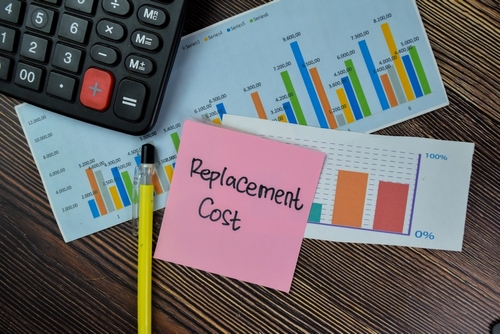 When it comes to businesses looking to mitigate risk, one concept that’s important to explore is reproduction costs. The first step is to distinguish between reproduction and replacement costs. Replacement cost refers to how much it would cost a company to replace an asset that will duplicate the performance of the beginning asset; however, it does not necessarily have to meet the same materials, specifications, etc. Reproduction cost refers to how much it would cost a company to reproduce the asset so that it’s constructed of the same materials, specifications, etc., based on current market prices.
  The internet keeps evolving. It started with static web pages in Web 1.0 before evolving to interactive and dynamic content in Web 2.0. A new phase of technology is now introducing Web 3.0, or the third generation of The World Wide Web. Although it is a work in progress, it is necessary to understand the new concept and how it will impact the future of online interactions.
 Relating to a national emergency declared by the President on March 13, 2020 (HJ Res 7) – On March 13, 2020, then-President Trump declared a national emergency relating to the COVID-19 pandemic. Since then, emergency status has continued until the passage of this resolution. The national emergency status relaxed many healthcare rules, such as training mandates for nursing home aides, easier access to certain prescribed medications (e.g., Adderall, Ritalin, oxycodone, buprenorphine), and utilization of uncredentialed nurse practitioners and physician assistants for hospitalized Medicare patients. The resolution to end emergency status passed in the House on Feb. 1 and Senate on March 29. The resolution was introduced by Rep. Paul Gosar (R-AZ) on Jan. 9 and enacted by President Biden on April 10.
 So, you filed and paid all your taxes on the money you earned in 2021. Now, the company you work for finds itself in trouble, and you are forced to pay back part of your compensation. The big question is, will the IRS refund you for the taxes you already paid related to this compensation? While this seems like a bizarre scenario at first glance, it is more common than you might think.
 Now that spring is here, it might be a great time to give your finances a fresh look. Here are a few key items to put on your May to-do list.
 It’s that time of year again: tax time. And while many of your money-saving options might be limited after Dec. 31, you can still do a lot to help lower your taxes, save money, and avoid penalties. Here’s a quick snapshot.
 When it comes to valuing a business, there are many ways to examine a company’s profitability. Looking at a business’ liquidation value and its breakup value are two of many approaches to see how a company is functioning and how it might run under different management and economic environments.
 Most people volunteer out of a sense of altruism, duty or purpose – not to get a tax deduction from Uncle Sam. At the same time, if your good deeds could also result in lower taxes, why not? Theoretically, this would free up more time to volunteer or let you make a charitable donation, a win-win for you and the cause you care about.