To rescind certain balances made available to the Internal Revenue Service (HR 23) – Introduced by Rep. Adrian Smith (R-NE) on Jan. 9, this bill would rescind funds allocated to the Internal Revenue Service by the Inflation Reduction Act of 2022. The bill is designed to “defund” specific enforcement activities, operational support, enhancement to the e-file tax return system, and allocations to the U.S. Tax Court and other Department of the Treasury tax agencies. The bill passed in the House on Jan. 9 and has moved to the Senate,
Protecting America’s Strategic Petroleum Reserve from China Act (HR 22) – This bill would prohibit the Department of Energy (DOE) from selling crude oil to any entity under the ownership, control, or influence of the Chinese Communist Party. The bill was introduced on Jan. 9 by Rep. Cathy Anne McMorris Rogers (R-WA). It passed in the House on Jan. 12 and is currently under consideration in the Senate.
Born-Alive Abortion Survivors Protection Act (HR 26) – An example of one of many abortion-related bills introduced by the House in the new 118th Congressional Session, this Act would require healthcare practitioners to exercise the proper degree of care in cases where a fetus survives an attempted abortion – including ensuring the neonate is immediately admitted to a hospital. Failure to provide such care or failure of others to report the crime would be subject to a fine and/or up to five years in prison. Furthermore, anyone who intentionally kills the neonate would be subject to prosecution for murder. However, this bill would bar criminal prosecution of the birth mother in these circumstances and permit her to bring civil action for these violations if perpetrated by others. The bill was introduced by Rep. Ann Wagner (R-MO) on Jan. 9 and is under assignment in a House committee.
Fair Tax Act of 2023 (HR 25) – This legislation was introduced in the House by Rep. Buddy Carter (R-GA) on Jan. 9. It is currently assigned to committee for consideration. The purpose of the bill is to replace the current income tax system (including payroll, estate, and gift taxes) with a national consumption sales tax on goods and services. Instead of paying the current 10 percent to 37 percent tax rates based on income bracket, as well as eliminating all deductions and credits, U.S. residents would pay a minimum 23 percent federal tax (in addition to state and local taxes) on all purchases, regardless of income bracket. Exemptions would include property or services purchased for business, export, investment, or state government functions. The flat rate would essentially tax a higher percentage of income from low earners while high-income earners would have more assets available for savings and investment that would not be taxable. Each state would bear the responsibility for collecting and remitting this federal sales tax to the Treasury.
Overhauling the National Tax System, Eliminating Oil Sales to China, and Criminalizing Late Abortion Attempts
February 1, 2023 · Blog, Congress at Work
⏱ 3 min read
To rescind certain balances made available to the Internal Revenue Service (HR 23) – Introduced by Rep. Adrian Smith (R-NE) on Jan. 9, this bill would rescind funds allocated to the Internal Revenue Service by the Inflation Reduction Act of 2022. The bill is designed to “defund” specific enforcement activities, operational support, enhancement to the e-file tax return system, and allocations to the U.S. Tax Court and other Department of the Treasury tax agencies. The bill passed in the House on Jan. 9 and has moved to the Senate,
Protecting America’s Strategic Petroleum Reserve from China Act (HR 22) – This bill would prohibit the Department of Energy (DOE) from selling crude oil to any entity under the ownership, control, or influence of the Chinese Communist Party. The bill was introduced on Jan. 9 by Rep. Cathy Anne McMorris Rogers (R-WA). It passed in the House on Jan. 12 and is currently under consideration in the Senate.
Born-Alive Abortion Survivors Protection Act (HR 26) – An example of one of many abortion-related bills introduced by the House in the new 118th Congressional Session, this Act would require healthcare practitioners to exercise the proper degree of care in cases where a fetus survives an attempted abortion – including ensuring the neonate is immediately admitted to a hospital. Failure to provide such care or failure of others to report the crime would be subject to a fine and/or up to five years in prison. Furthermore, anyone who intentionally kills the neonate would be subject to prosecution for murder. However, this bill would bar criminal prosecution of the birth mother in these circumstances and permit her to bring civil action for these violations if perpetrated by others. The bill was introduced by Rep. Ann Wagner (R-MO) on Jan. 9 and is under assignment in a House committee.
Fair Tax Act of 2023 (HR 25) – This legislation was introduced in the House by Rep. Buddy Carter (R-GA) on Jan. 9. It is currently assigned to committee for consideration. The purpose of the bill is to replace the current income tax system (including payroll, estate, and gift taxes) with a national consumption sales tax on goods and services. Instead of paying the current 10 percent to 37 percent tax rates based on income bracket, as well as eliminating all deductions and credits, U.S. residents would pay a minimum 23 percent federal tax (in addition to state and local taxes) on all purchases, regardless of income bracket. Exemptions would include property or services purchased for business, export, investment, or state government functions. The flat rate would essentially tax a higher percentage of income from low earners while high-income earners would have more assets available for savings and investment that would not be taxable. Each state would bear the responsibility for collecting and remitting this federal sales tax to the Treasury.
Disclaimer
These articles provide general information on tax, accounting, and financial topics for small businesses and individuals. They are educational in nature and are not specific legal, accounting, financial, tax, or other professional advice, and should not be relied upon as such. This content was prepared by Service2Client and may have been reviewed or edited by the website owner for accuracy and compliance. Look for a trust mark below for verification details. No representation is made that any approach described will achieve a particular result, and no regulatory or professional body has reviewed or endorsed this content. Because each situation is different, readers should consult a qualified professional about their specific circumstances before acting. Images accompanying these articles are protected by copyright and may not be copied or reused.
Natural language processing (NLP) is a technology that allows computers to understand and process human language. Processing of natural language is necessary when you want an intelligent device to follow your instructions. NPL is an artificial intelligence (AI) component with many real-life applications.
As technology advances, business leaders have to figure out how to tap into the new trends to remain relevant, stay ahead of competition, and meet consumer expectations and needs.
How NLP Works in Brief
NLP involves making computers perform tasks with the natural language humans use. The input and output can be spoken or written text. NLP combines computational linguistics – rule-based modeling of human language – with statistical, machine learning, and deep learning models.
NLP aims to build machines that understand and react to text or voice data and then respond with text or speech in a similar manner as humans do. Examples of NLP in real life include voice-operated GPS systems, personal assistant apps, speech-to-text dictation software, and customer service chatbots.
As businesses seek better ways to improve efficiency, NLP is one technology promising huge rewards for enterprises dealing with vast quantities of unstructured text. In accounting, unstructured data include transaction descriptions, invoices, written communication, etc.
The use of NLP is growing significantly in enterprise solutions designed to help streamline business operations. Large companies such as Deloitte, Ernst & Young (EY), and PricewaterhouseCoopers (PwC) have implemented various NLP solutions. A good example is Deloitte, which incorporated NLP into its Audit Command Language to improve contract compliance.
How NLP Can Improve the Efficiency of Accounting Processes
Areas in which NLP helps improve efficiency include:
Forensic Investigations When CPAs want to perform forensic investigations, they have to deal with significant amounts of data from documents such as bank statements, transaction data tables, and data found in emails or deposition transcripts. Analyzing all the data as they try to look for specific patterns or gain insights is challenging. However, the application of NLP can be helpful in the investigative analysis process. NLP using algorithms can identify patterns automatically and reduce the time it would have taken to analyze the documents.
Accounting and Auditing Auditing is challenging due to the process of reviewing financial statements and ensuring they match regulations and legal standards. Auditors must have excellent analytical and decision-making skills to spot inaccuracies in financial statements. However, NLP helps to optimize the auditing process.
Financial Analysis and Automated Generation of Financial Reports NLP can automatically extract financial data from balance sheets, income statements, and cash flow statements. This can cut down on time and error-prone work. At the same time, it can obtain insights from massive financial data sets and financial reports. This enables accountants to make data-driven decisions and quickly identify trends and patterns in the data, hence, making it easy to provide guidance to clients on investments and household finances.
Automated Data Entry NLP can be used to extract data automatically from unstructured text documents, including bills and receipts. It also can be used to automate the entry of data from tax documents and input it into accounting systems. This can cut down on time and error-prone work.
Improve Centralized Data Management Solutions Incorporating NLP in accounting and procurement helps improve the ability of a centralized data management system to collect and integrate data from different sources. This enables standardization and collaboration. Additionally, the data provided has higher-quality insights. As a result, there is better financial planning and improved risk assessment and management.
Customer Interaction NLP can be used to enhance the effectiveness of customer interaction. This is done by automating the procedure for responding to client inquiries, such as concerning invoices, payments, and account balances.
Conclusion
Natural language processing is proving to be a powerful technology that can help improve the efficiency and effectiveness of accounting processes. As it continues to evolve, it will likely become an increasingly important tool for accountants and other financial professionals. Most importantly, these advanced technologies take care of manually reviewing unstructured data. This helps businesses scale and – at the same time – reduce costs.
How To Use Natural Language Processing To Improve The Efficiency Of Accounting Processes
February 1, 2023 · Blog, What's New in Technology
⏱ 4 min read
Natural language processing (NLP) is a technology that allows computers to understand and process human language. Processing of natural language is necessary when you want an intelligent device to follow your instructions. NPL is an artificial intelligence (AI) component with many real-life applications.
As technology advances, business leaders have to figure out how to tap into the new trends to remain relevant, stay ahead of competition, and meet consumer expectations and needs.
How NLP Works in Brief
NLP involves making computers perform tasks with the natural language humans use. The input and output can be spoken or written text. NLP combines computational linguistics – rule-based modeling of human language – with statistical, machine learning, and deep learning models.
NLP aims to build machines that understand and react to text or voice data and then respond with text or speech in a similar manner as humans do. Examples of NLP in real life include voice-operated GPS systems, personal assistant apps, speech-to-text dictation software, and customer service chatbots.
As businesses seek better ways to improve efficiency, NLP is one technology promising huge rewards for enterprises dealing with vast quantities of unstructured text. In accounting, unstructured data include transaction descriptions, invoices, written communication, etc.
The use of NLP is growing significantly in enterprise solutions designed to help streamline business operations. Large companies such as Deloitte, Ernst & Young (EY), and PricewaterhouseCoopers (PwC) have implemented various NLP solutions. A good example is Deloitte, which incorporated NLP into its Audit Command Language to improve contract compliance.
How NLP Can Improve the Efficiency of Accounting Processes
Areas in which NLP helps improve efficiency include:
Forensic Investigations When CPAs want to perform forensic investigations, they have to deal with significant amounts of data from documents such as bank statements, transaction data tables, and data found in emails or deposition transcripts. Analyzing all the data as they try to look for specific patterns or gain insights is challenging. However, the application of NLP can be helpful in the investigative analysis process. NLP using algorithms can identify patterns automatically and reduce the time it would have taken to analyze the documents.
Accounting and Auditing Auditing is challenging due to the process of reviewing financial statements and ensuring they match regulations and legal standards. Auditors must have excellent analytical and decision-making skills to spot inaccuracies in financial statements. However, NLP helps to optimize the auditing process.
Financial Analysis and Automated Generation of Financial Reports NLP can automatically extract financial data from balance sheets, income statements, and cash flow statements. This can cut down on time and error-prone work. At the same time, it can obtain insights from massive financial data sets and financial reports. This enables accountants to make data-driven decisions and quickly identify trends and patterns in the data, hence, making it easy to provide guidance to clients on investments and household finances.
Automated Data Entry NLP can be used to extract data automatically from unstructured text documents, including bills and receipts. It also can be used to automate the entry of data from tax documents and input it into accounting systems. This can cut down on time and error-prone work.
Improve Centralized Data Management Solutions Incorporating NLP in accounting and procurement helps improve the ability of a centralized data management system to collect and integrate data from different sources. This enables standardization and collaboration. Additionally, the data provided has higher-quality insights. As a result, there is better financial planning and improved risk assessment and management.
Customer Interaction NLP can be used to enhance the effectiveness of customer interaction. This is done by automating the procedure for responding to client inquiries, such as concerning invoices, payments, and account balances.
Conclusion
Natural language processing is proving to be a powerful technology that can help improve the efficiency and effectiveness of accounting processes. As it continues to evolve, it will likely become an increasingly important tool for accountants and other financial professionals. Most importantly, these advanced technologies take care of manually reviewing unstructured data. This helps businesses scale and – at the same time – reduce costs.
Disclaimer
These articles provide general information on tax, accounting, and financial topics for small businesses and individuals. They are educational in nature and are not specific legal, accounting, financial, tax, or other professional advice, and should not be relied upon as such. This content was prepared by Service2Client and may have been reviewed or edited by the website owner for accuracy and compliance. Look for a trust mark below for verification details. No representation is made that any approach described will achieve a particular result, and no regulatory or professional body has reviewed or endorsed this content. Because each situation is different, readers should consult a qualified professional about their specific circumstances before acting. Images accompanying these articles are protected by copyright and may not be copied or reused.
So, we’re a month into 2023, and the sheen might’ve dulled from all your shiny New Year’s resolutions. Though diet and exercise are the top things you might want to change, there’s one you might not need to touch – your budget. Here’s a discussion about who does and doesn’t need to revamp their finances.
Who Needs a New Budget?
Budgets are always a good idea. They help you save money and pay off debt. But only a few folks need to create a new one. According to Annette Harris, founder of Harris Financial Coaching, you need a new budget if you are:
Unable to keep up with expenses
Falling behind on debt payments
Borrowing money from others
Relying on credit cards
Using payday lenders
But on the flipside, some positive life events may also call for a fresh look at your budget:
Buying a house
Planning home improvements
Sending a child to college
Now, if you’re debt-free, saving, and investing, then a new budget probably won’t provide much value. Further, Harris says that if you don’t have children that you’re putting through college, don’t have any upcoming big purchases, continue to spend wisely and build your net worth, don’t bother changing what you’re already doing. In other words, of it’s not broke, don’t fix it.
The Stigma Around the ‘B’ Word
That would be “budget.” Jesse Mecham, founder of the app You Need a Budget aka YNAB, has a good explanation about why this is so. He says that this very term (budget) is among the reasons that people don’t follow through with setting one – and sticking with it. He says that generally, people think it means restriction, deprivation, or diet. What you need, he says, is a shift in perspective. If you think about a budget being a plan for intentional spending, no matter what year it is, you always want to be intentional. Makes good sense, right?
Some Budgets Might Even Cause Harm
Dana Miranda, founder of the “budget-free” financial ed website Healthy Rich, believes that budgets can do more harm than good. She says that people inevitably feel like they’re failing and aim for a fresh start at the beginning of the year, but no amount of recommitting to budgeting can make the realities of your life fit into the unrealistic restriction of a budget. Miranda says when people are stressed about money, they budget. When they succeed, it’s great. But when they fail, they feel like a failure and, consequently, are even more stressed, much like dieting.
Alternatives to Budgeting
Here are three other ways to get a handle on your finances in the New Year.
Track Your Goals
We’re not talking about counting every dollar but focusing on goals. Instead of not overspending, eating out less, or avoiding online shopping, find areas in your budget that can help you accomplish your goals – one at a time. For instance, if you want to save for college for your kids, buy an investment property, or create a vacation fund, set up a tracker with a defined timeline and work toward that. It’s easier to narrowly focus on one important goal than on everything all at once.
Create an Annual Budget
This is in contrast to a monthly budget. This helps you accommodate for variables – life stuff – that inevitably come your way and knock you off course. According to Harris, take time to map out monthly costs, travel plans, and home renovations, along with any one-time and variable recurring costs. The bills you pay regularly are easy to anticipate; it’s the ones you don’t that will throw you a curveball.
Look at Your Relationship With Money
Ask yourself things like:
Do I find joy in the way I make money?
Are the commitments I made (like a monthly savings amount) still working for me?
Am I achieving what I want?
Am I at peace with the way I spend?
Harris says self-awareness found through journaling, meditation, yoga, and prayer are great ways to harness conscious spending. They contribute, she says, to helping you become more intentional with the way you spend.
No one is perfect. Everyone makes mistakes. However, with a few helpful hints like these, you can get better and better every day.
Why You Might Not Need a New Budget for the New Year
February 1, 2023 · Blog, Tip of the Month
⏱ 4 min read
So, we’re a month into 2023, and the sheen might’ve dulled from all your shiny New Year’s resolutions. Though diet and exercise are the top things you might want to change, there’s one you might not need to touch – your budget. Here’s a discussion about who does and doesn’t need to revamp their finances.
Who Needs a New Budget?
Budgets are always a good idea. They help you save money and pay off debt. But only a few folks need to create a new one. According to Annette Harris, founder of Harris Financial Coaching, you need a new budget if you are:
Unable to keep up with expenses
Falling behind on debt payments
Borrowing money from others
Relying on credit cards
Using payday lenders
But on the flipside, some positive life events may also call for a fresh look at your budget:
Buying a house
Planning home improvements
Sending a child to college
Now, if you’re debt-free, saving, and investing, then a new budget probably won’t provide much value. Further, Harris says that if you don’t have children that you’re putting through college, don’t have any upcoming big purchases, continue to spend wisely and build your net worth, don’t bother changing what you’re already doing. In other words, of it’s not broke, don’t fix it.
The Stigma Around the ‘B’ Word
That would be “budget.” Jesse Mecham, founder of the app You Need a Budget aka YNAB, has a good explanation about why this is so. He says that this very term (budget) is among the reasons that people don’t follow through with setting one – and sticking with it. He says that generally, people think it means restriction, deprivation, or diet. What you need, he says, is a shift in perspective. If you think about a budget being a plan for intentional spending, no matter what year it is, you always want to be intentional. Makes good sense, right?
Some Budgets Might Even Cause Harm
Dana Miranda, founder of the “budget-free” financial ed website Healthy Rich, believes that budgets can do more harm than good. She says that people inevitably feel like they’re failing and aim for a fresh start at the beginning of the year, but no amount of recommitting to budgeting can make the realities of your life fit into the unrealistic restriction of a budget. Miranda says when people are stressed about money, they budget. When they succeed, it’s great. But when they fail, they feel like a failure and, consequently, are even more stressed, much like dieting.
Alternatives to Budgeting
Here are three other ways to get a handle on your finances in the New Year.
Track Your Goals
We’re not talking about counting every dollar but focusing on goals. Instead of not overspending, eating out less, or avoiding online shopping, find areas in your budget that can help you accomplish your goals – one at a time. For instance, if you want to save for college for your kids, buy an investment property, or create a vacation fund, set up a tracker with a defined timeline and work toward that. It’s easier to narrowly focus on one important goal than on everything all at once.
Create an Annual Budget
This is in contrast to a monthly budget. This helps you accommodate for variables – life stuff – that inevitably come your way and knock you off course. According to Harris, take time to map out monthly costs, travel plans, and home renovations, along with any one-time and variable recurring costs. The bills you pay regularly are easy to anticipate; it’s the ones you don’t that will throw you a curveball.
Look at Your Relationship With Money
Ask yourself things like:
Do I find joy in the way I make money?
Are the commitments I made (like a monthly savings amount) still working for me?
Am I achieving what I want?
Am I at peace with the way I spend?
Harris says self-awareness found through journaling, meditation, yoga, and prayer are great ways to harness conscious spending. They contribute, she says, to helping you become more intentional with the way you spend.
No one is perfect. Everyone makes mistakes. However, with a few helpful hints like these, you can get better and better every day.
These articles provide general information on tax, accounting, and financial topics for small businesses and individuals. They are educational in nature and are not specific legal, accounting, financial, tax, or other professional advice, and should not be relied upon as such. This content was prepared by Service2Client and may have been reviewed or edited by the website owner for accuracy and compliance. Look for a trust mark below for verification details. No representation is made that any approach described will achieve a particular result, and no regulatory or professional body has reviewed or endorsed this content. Because each situation is different, readers should consult a qualified professional about their specific circumstances before acting. Images accompanying these articles are protected by copyright and may not be copied or reused.
When it comes to defining an impaired asset, its fair market value is worth less than the original cost of the asset – or, more formally, its carrying value. As a company re-evaluates its assets’ value, and when it determines there’s a discrepancy between the book or original value and the current market value, impaired assets that are lower in value are written down on the balance sheet. The business’ income statement shows a loss for the negative difference in value. Impaired assets can be Property, Plant, and Equipment (PP&E), goodwill, or fixed assets.
Making a Judgment on Asset Impairment
One more consideration to get an accurate calculation, according to generally accepted accounting principles (GAAP), is to ensure that accumulated depreciation is subtracted from the asset’s historical or original cost before assessing the difference between the fair market and carrying values. Equally as important is the GAAP recommendation for businesses to perform impairment tests annually.
Assets could be damaged physically, consumer demand may change, or legal factors could reduce its fair market value. These reasons may cause lowered projected future cash flows – lower than an asset’s current carrying value. It, therefore, requires an impairment assessment.
Illustrating With a Real-World Example
Take a business that bought a piece of equipment 24 months ago worth $500,000 and depreciates it $25,000 annually. Using these two figures, we can determine the equipment’s carrying value is as follows for the present year:
[($500,000 – ($25,000 x 2 years)] = $450,000
If the same type of asset (same age, usage, etc.) can be purchased on the open market but is able to be purchased for $400,000 (market value), the asset the business owns would be considered an impaired asset.
The difference between the current market value and the carrying value is: $450,000 – $400,000 = $50,000. The $50,000 would be written down.
It’s important to note that once an asset is impaired, depreciation going forward must be recalculated based upon the new valuation figure.
Criteria to Establish Impairment
According to GAAP, businesses must begin with a recoverability test. If the initial cost of an asset (minus any depreciation or amortization) is more than the non-discount rate adjusted cash flows it’s projected to produce, the asset is considered impaired.
Assuming the asset is deemed impaired, the second part determines how much impairment exists, which is the gap between the original and market value of the asset in question. If the fair value is unspecified, the total of the discount rate adjusted future cash flows is acceptable.
Assuming the total of non-discount rate adjusted future cash flows is $90,000 – the projected undiscounted cash flows through the next 36 months, which is lower than the estimated carry amount (or book value) of $115,000. The recoverability test is passed, so the asset should be impaired. Based on the second step, the impairment loss will be $25,000 ($115,000 – $90,000). If, however, the fair market value is unknown, the projected cash flows of $30,000 per year for the next 36 months should be discounted to present value. This example can assume a 5 percent discount rate:
To calculate the impairment loss with an unknown fair market value: $115,000 – ($28,571.43 + $27,210.88 + $25,915.69) = $115,000 – $81,698.00 = $33,302.00
Whether it’s a time of economic uncertainty or the economy is firing on full cylinders, assets can change value. Businesses that effectively navigate changing conditions are able to increase their chances of surviving or thriving amid the challenges they might face.
Defining an Impaired Asset
February 1, 2023 · Blog, General Business News
⏱ 3 min read
When it comes to defining an impaired asset, its fair market value is worth less than the original cost of the asset – or, more formally, its carrying value. As a company re-evaluates its assets’ value, and when it determines there’s a discrepancy between the book or original value and the current market value, impaired assets that are lower in value are written down on the balance sheet. The business’ income statement shows a loss for the negative difference in value. Impaired assets can be Property, Plant, and Equipment (PP&E), goodwill, or fixed assets.
Making a Judgment on Asset Impairment
One more consideration to get an accurate calculation, according to generally accepted accounting principles (GAAP), is to ensure that accumulated depreciation is subtracted from the asset’s historical or original cost before assessing the difference between the fair market and carrying values. Equally as important is the GAAP recommendation for businesses to perform impairment tests annually.
Assets could be damaged physically, consumer demand may change, or legal factors could reduce its fair market value. These reasons may cause lowered projected future cash flows – lower than an asset’s current carrying value. It, therefore, requires an impairment assessment.
Illustrating With a Real-World Example
Take a business that bought a piece of equipment 24 months ago worth $500,000 and depreciates it $25,000 annually. Using these two figures, we can determine the equipment’s carrying value is as follows for the present year:
[($500,000 – ($25,000 x 2 years)] = $450,000
If the same type of asset (same age, usage, etc.) can be purchased on the open market but is able to be purchased for $400,000 (market value), the asset the business owns would be considered an impaired asset.
The difference between the current market value and the carrying value is: $450,000 – $400,000 = $50,000. The $50,000 would be written down.
It’s important to note that once an asset is impaired, depreciation going forward must be recalculated based upon the new valuation figure.
Criteria to Establish Impairment
According to GAAP, businesses must begin with a recoverability test. If the initial cost of an asset (minus any depreciation or amortization) is more than the non-discount rate adjusted cash flows it’s projected to produce, the asset is considered impaired.
Assuming the asset is deemed impaired, the second part determines how much impairment exists, which is the gap between the original and market value of the asset in question. If the fair value is unspecified, the total of the discount rate adjusted future cash flows is acceptable.
Assuming the total of non-discount rate adjusted future cash flows is $90,000 – the projected undiscounted cash flows through the next 36 months, which is lower than the estimated carry amount (or book value) of $115,000. The recoverability test is passed, so the asset should be impaired. Based on the second step, the impairment loss will be $25,000 ($115,000 – $90,000). If, however, the fair market value is unknown, the projected cash flows of $30,000 per year for the next 36 months should be discounted to present value. This example can assume a 5 percent discount rate:
To calculate the impairment loss with an unknown fair market value: $115,000 – ($28,571.43 + $27,210.88 + $25,915.69) = $115,000 – $81,698.00 = $33,302.00
Whether it’s a time of economic uncertainty or the economy is firing on full cylinders, assets can change value. Businesses that effectively navigate changing conditions are able to increase their chances of surviving or thriving amid the challenges they might face.
Disclaimer
These articles provide general information on tax, accounting, and financial topics for small businesses and individuals. They are educational in nature and are not specific legal, accounting, financial, tax, or other professional advice, and should not be relied upon as such. This content was prepared by Service2Client and may have been reviewed or edited by the website owner for accuracy and compliance. Look for a trust mark below for verification details. No representation is made that any approach described will achieve a particular result, and no regulatory or professional body has reviewed or endorsed this content. Because each situation is different, readers should consult a qualified professional about their specific circumstances before acting. Images accompanying these articles are protected by copyright and may not be copied or reused.
Every year, typically right after the new year starts, the IRS formally announces key dates and deadlines for the current tax season. Recently, the IRS made the announcements for the current 2023 tax season.
To make sure the process goes as smoothly as possible, it’s best if you are aware of this tax season’s deadlines and key dates so you don’t miss a beat in working with your CPA.
Tax Season in Perspective
More than 168 million individual tax returns are expected to be submitted to the IRS in 2023, covering the 2022 tax year. The last three years saw delays and snafus, largely impacted by the pandemic. This year, the IRS assures taxpayers it is taking measures to streamline filings.
Under the recently passed Inflation Reduction Act, the IRS hired thousands of customer service representatives. They will be on call to assist with answering questions via the IRA taxpayer helpline. The helpline number is: 1-800-829-1040; additionally, online tools and resources can be found on the IRS website.
The IRS also provides other free assistance services, such as its Volunteer Income Tax Assistance and Tax Counseling for the Elderly for qualified individuals.
Important Dates for the 2023 Tax Filing Season
IRS Free Filing Opens for the season – Jan. 13
Opening 10 days earlier than the regular official start of the season, the IRS free file program offers taxpayers making less than $73,000 in 2022 to file free of charge using online tax software.
Estimated Tax Payments for the 2022 tax year 4th quarter – Jan. 17
First day the IRS starts accepting and processing 2023 tax season (2022 fiscal year) individual tax returns – Jan. 23
Earned Income Tax Credit (EITC) Awareness Day – Jan. 27
This day is designed to raise awareness of the EITC availability to low- and moderate-income workers and families who may qualify but are unaware.
Due date for 2022 tax returns to be filed or extension requested, tax due to be paid – April 18
This deadline is an additional three days beyond the typical deadline of April 15, granted due to the Emancipation Day holiday in Washington, D.C., and the way the weekend falls.
Note that refunds are expected to be issued in 21 days or less (if using the direct deposit option and filing electronically).
Due date for 2022 individual tax returns put on extension – Oct. 16
Gather Your Important Documents
Keeping these dates and deadlines in mind, make sure you organize and gather all your tax records and documents as you receive them electronically or in the mail. This will make it faster and easier to work with your tax professional.
Conclusion
Keep in mind the above dates as you organize and prepare for the 2023 tax season. Doing so will make your life much easier and less stressful when it comes to taxes.
Key Deadlines and Changes for the 2023 Tax Season
February 1, 2023 · Blog, Tax and Financial News
⏱ 3 min read
Every year, typically right after the new year starts, the IRS formally announces key dates and deadlines for the current tax season. Recently, the IRS made the announcements for the current 2023 tax season.
To make sure the process goes as smoothly as possible, it’s best if you are aware of this tax season’s deadlines and key dates so you don’t miss a beat in working with your CPA.
Tax Season in Perspective
More than 168 million individual tax returns are expected to be submitted to the IRS in 2023, covering the 2022 tax year. The last three years saw delays and snafus, largely impacted by the pandemic. This year, the IRS assures taxpayers it is taking measures to streamline filings.
Under the recently passed Inflation Reduction Act, the IRS hired thousands of customer service representatives. They will be on call to assist with answering questions via the IRA taxpayer helpline. The helpline number is: 1-800-829-1040; additionally, online tools and resources can be found on the IRS website.
The IRS also provides other free assistance services, such as its Volunteer Income Tax Assistance and Tax Counseling for the Elderly for qualified individuals.
Important Dates for the 2023 Tax Filing Season
IRS Free Filing Opens for the season – Jan. 13
Opening 10 days earlier than the regular official start of the season, the IRS free file program offers taxpayers making less than $73,000 in 2022 to file free of charge using online tax software.
Estimated Tax Payments for the 2022 tax year 4th quarter – Jan. 17
First day the IRS starts accepting and processing 2023 tax season (2022 fiscal year) individual tax returns – Jan. 23
Earned Income Tax Credit (EITC) Awareness Day – Jan. 27
This day is designed to raise awareness of the EITC availability to low- and moderate-income workers and families who may qualify but are unaware.
Due date for 2022 tax returns to be filed or extension requested, tax due to be paid – April 18
This deadline is an additional three days beyond the typical deadline of April 15, granted due to the Emancipation Day holiday in Washington, D.C., and the way the weekend falls.
Note that refunds are expected to be issued in 21 days or less (if using the direct deposit option and filing electronically).
Due date for 2022 individual tax returns put on extension – Oct. 16
Gather Your Important Documents
Keeping these dates and deadlines in mind, make sure you organize and gather all your tax records and documents as you receive them electronically or in the mail. This will make it faster and easier to work with your tax professional.
Conclusion
Keep in mind the above dates as you organize and prepare for the 2023 tax season. Doing so will make your life much easier and less stressful when it comes to taxes.
Disclaimer
These articles provide general information on tax, accounting, and financial topics for small businesses and individuals. They are educational in nature and are not specific legal, accounting, financial, tax, or other professional advice, and should not be relied upon as such. This content was prepared by Service2Client and may have been reviewed or edited by the website owner for accuracy and compliance. Look for a trust mark below for verification details. No representation is made that any approach described will achieve a particular result, and no regulatory or professional body has reviewed or endorsed this content. Because each situation is different, readers should consult a qualified professional about their specific circumstances before acting. Images accompanying these articles are protected by copyright and may not be copied or reused.

 To rescind certain balances made available to the Internal Revenue Service (HR 23) – Introduced by Rep. Adrian Smith (R-NE) on Jan. 9, this bill would rescind funds allocated to the Internal Revenue Service by the Inflation Reduction Act of 2022. The bill is designed to “defund” specific enforcement activities, operational support, enhancement to the e-file tax return system, and allocations to the U.S. Tax Court and other Department of the Treasury tax agencies. The bill passed in the House on Jan. 9 and has moved to the Senate,



 Natural language processing (NLP) is a technology that allows computers to understand and process human language. Processing of natural language is necessary when you want an intelligent device to follow your instructions. NPL is an artificial intelligence (AI) component with many real-life applications.
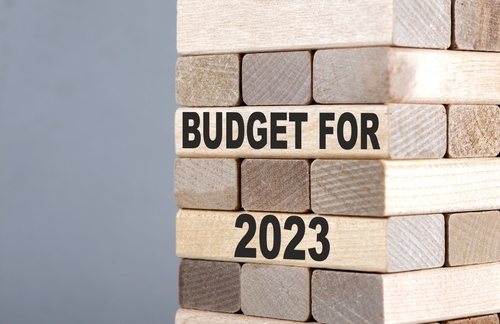 So, we’re a month into 2023, and the sheen might’ve dulled from all your shiny New Year’s resolutions. Though diet and exercise are the top things you might want to change, there’s one you might not need to touch – your budget. Here’s a discussion about who does and doesn’t need to revamp their finances.
 When it comes to defining an impaired asset, its fair market value is worth less than the original cost of the asset – or, more formally, its carrying value. As a company re-evaluates its assets’ value, and when it determines there’s a discrepancy between the book or original value and the current market value, impaired assets that are lower in value are written down on the balance sheet. The business’ income statement shows a loss for the negative difference in value. Impaired assets can be Property, Plant, and Equipment (PP&E), goodwill, or fixed assets.
 Every year, typically right after the new year starts, the IRS formally announces key dates and deadlines for the current tax season. Recently, the IRS made the announcements for the current 2023 tax season.